
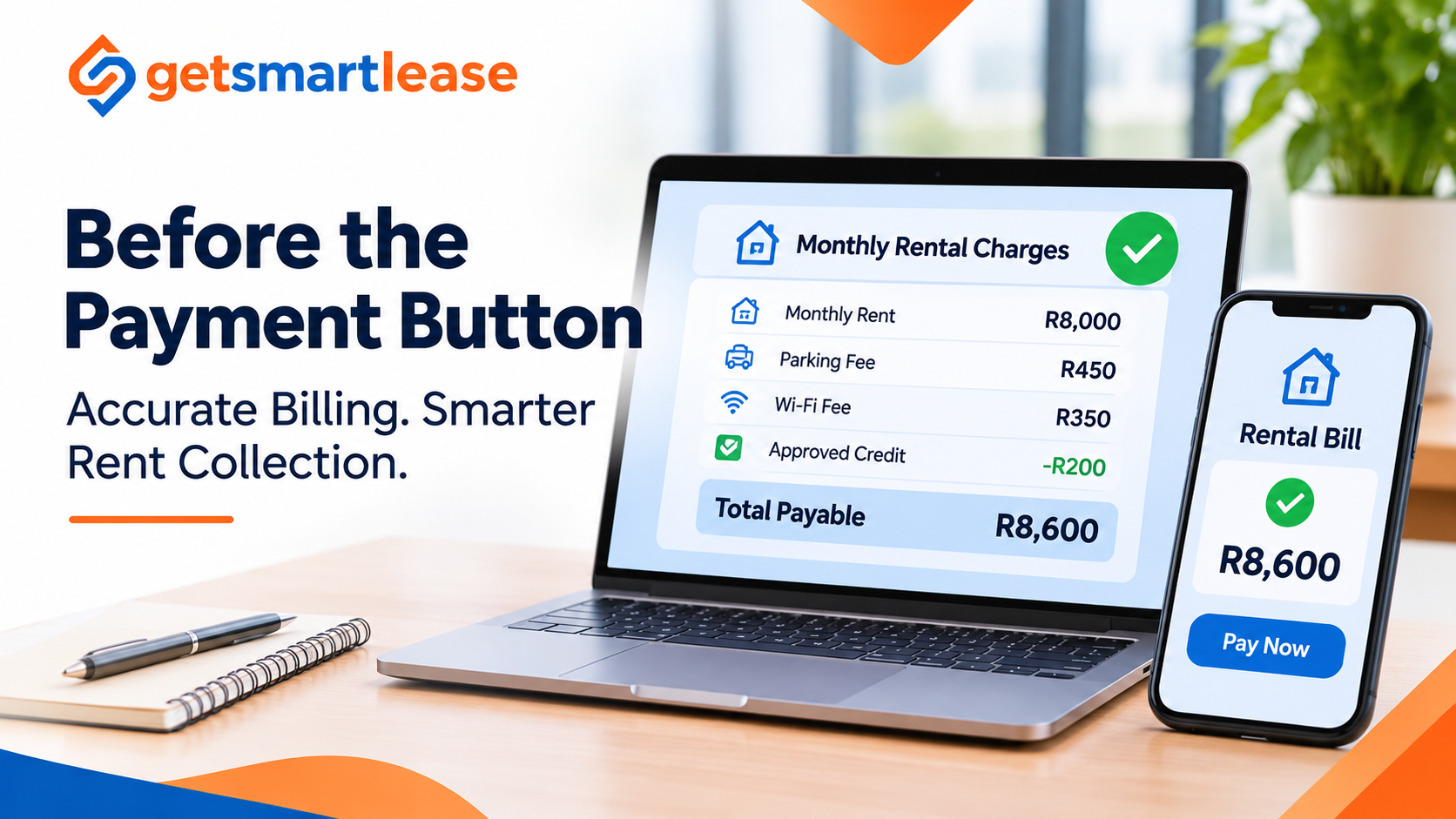
Before the Payment Button: Why Accurate Billing Is the Foundation of Smart Rent Collection
Introduction
When property managers think about improving rent collection, the focus often falls on faster transactions, automated reminders, and convenient digital payment options.
However, a successful payment journey begins long before a resident clicks the payment button.
Incorrect rental amounts, outdated lease information, missing adjustments, and unexpected additional charges can create confusion even when the payment technology works perfectly.
Smart rent collection is not simply about making payments easier. It is about ensuring residents are paying the correct amount, at the correct time, against the correct rental account.
1. The Hidden Problem Behind Payment Delays
Not every delayed rent payment is caused by financial difficulties or forgetfulness.
Sometimes, residents delay payments because they are unsure whether the amount requested is correct.
Common billing challenges include:
Incorrect monthly rental amounts.
Rental increases not reflected in billing records.
Duplicate charges.
Missing credits or adjustments.
Incorrect parking or service fees.
Charges associated with previous leases.
Resolving these issues requires additional communication and administrative effort.
Preventing billing errors before payment requests are issued can help reduce these unnecessary delays.
2. Connecting Billing With Active Lease Agreements
A lease agreement establishes the financial obligations between a resident and a property owner or manager.
However, when lease information and payment records are maintained separately, inconsistencies can develop.
For example, a resident renews their lease with an updated rental amount, but the billing system continues generating invoices using the previous amount.
This creates an avoidable discrepancy.
Connected digital workflows can help property managers align billing information with:
Active lease agreements.
Agreed rental amounts.
Lease commencement and expiry dates.
Approved rental increases.
Additional service charges.
Lease amendments.
This alignment helps ensure that payment requests reflect the applicable rental agreement.
3. Managing Changes Without Creating Billing Confusion
Rental arrangements do not always remain unchanged throughout a tenancy.
Residents may add parking services, change units, renew agreements, or receive approved financial adjustments.
Each change may affect the amount payable.
Without a structured process, property teams may struggle to determine when an adjustment should take effect.
Smart billing workflows can help maintain a clear record of approved changes, effective dates, and revised charges.
This allows property managers to handle changing rental arrangements without introducing unnecessary billing inconsistencies.
4. Making Every Charge Understandable
Residents should be able to understand what they are paying for without contacting their property manager for clarification.
Consider the following illustrative monthly rental statement:
| Description | Amount |
|---|---|
| Monthly Rent | R8,000 |
| Parking Fee | R450 |
| Wi-Fi Fee | R350 |
| Approved Credit | -R200 |
| Total Payable | R8,600 |
Instead of displaying only the final amount, an itemized breakdown explains how the balance was calculated.
Transparent billing can reduce misunderstandings, support informed payments, and improve confidence in rental records.
5. Preventing Errors Through Pre-Payment Validation
Traditional payment workflows often identify billing errors only after a resident raises a concern.
A smarter approach is to introduce validation before payment requests become available.
Property management systems can potentially check whether:
The rental account is associated with the correct resident.
The lease is active for the relevant billing period.
The rental amount matches approved lease information.
Additional charges have been authorized.
Duplicate invoices already exist.
Approved credits have been applied.
These checks can help property teams identify inconsistencies before they affect residents.
Automation can support this process, while unusual situations may still require human review.
6. Reducing the Cost of Billing Corrections
An incorrect invoice may appear to be a small administrative mistake.
However, correcting it can involve several additional tasks:
Reviewing the original lease agreement.
Investigating payment records.
Communicating with the resident.
Cancelling or correcting invoices.
Processing refunds or credits.
Updating financial reports.
Across a large property portfolio, repeated billing corrections can consume significant administrative time.
Improving billing accuracy at the beginning of the payment journey can reduce avoidable rework and allow property teams to focus on more valuable responsibilities.
7. Building Resident Trust Through Consistency
Residents expect their monthly rental obligations to be predictable.
Unexpected charges or unexplained changes can create uncertainty and weaken confidence in property management processes.
Consistent billing helps residents plan their finances and understand their responsibilities.
When changes are necessary, providing clear explanations and accurate records can help maintain a positive relationship.
Trust is built not only through successful transactions but also through the reliability of the information behind them.
8. Moving From Payment Processing to Payment Readiness
Modern property management should consider whether a rental account is ready for payment before requesting money from a resident.
Payment readiness means ensuring that:
Lease information is current.
Charges are accurate.
Adjustments are approved.
Outstanding balances are verified.
Payment requests are clearly presented.
Once these conditions are met, digital payment technology can deliver a more reliable and efficient collection experience.
This shifts the focus from simply processing transactions to preparing accurate, dependable payment journeys.
9. The Future of Smart Rent Collection
The next generation of rental payment technology will benefit from stronger connections between lease management, billing, financial records, and payment processing.
Rather than treating these functions as separate administrative activities, property managers can work toward a connected financial workflow.
Accurate information at the beginning of the process can support smoother transactions, fewer disputes, and more reliable financial reporting.
The real value of smart payments lies not only in how quickly money moves but also in how confidently every transaction can be completed.
Conclusion
A convenient payment button cannot solve an inaccurate billing process.
Smart rent collection begins with reliable lease information, transparent charges, approved adjustments, and accurate financial records.
By focusing on billing accuracy before transactions take place, property managers can reduce administrative work, prevent unnecessary disputes, and create a more dependable rental experience.
Smarter payments begin with smarter preparation.
At GetSmartLease, we believe connected digital property management can help create simpler, more transparent, and more efficient rental journeys.
Explore more insights at https://blog.getsmartlease.com/