
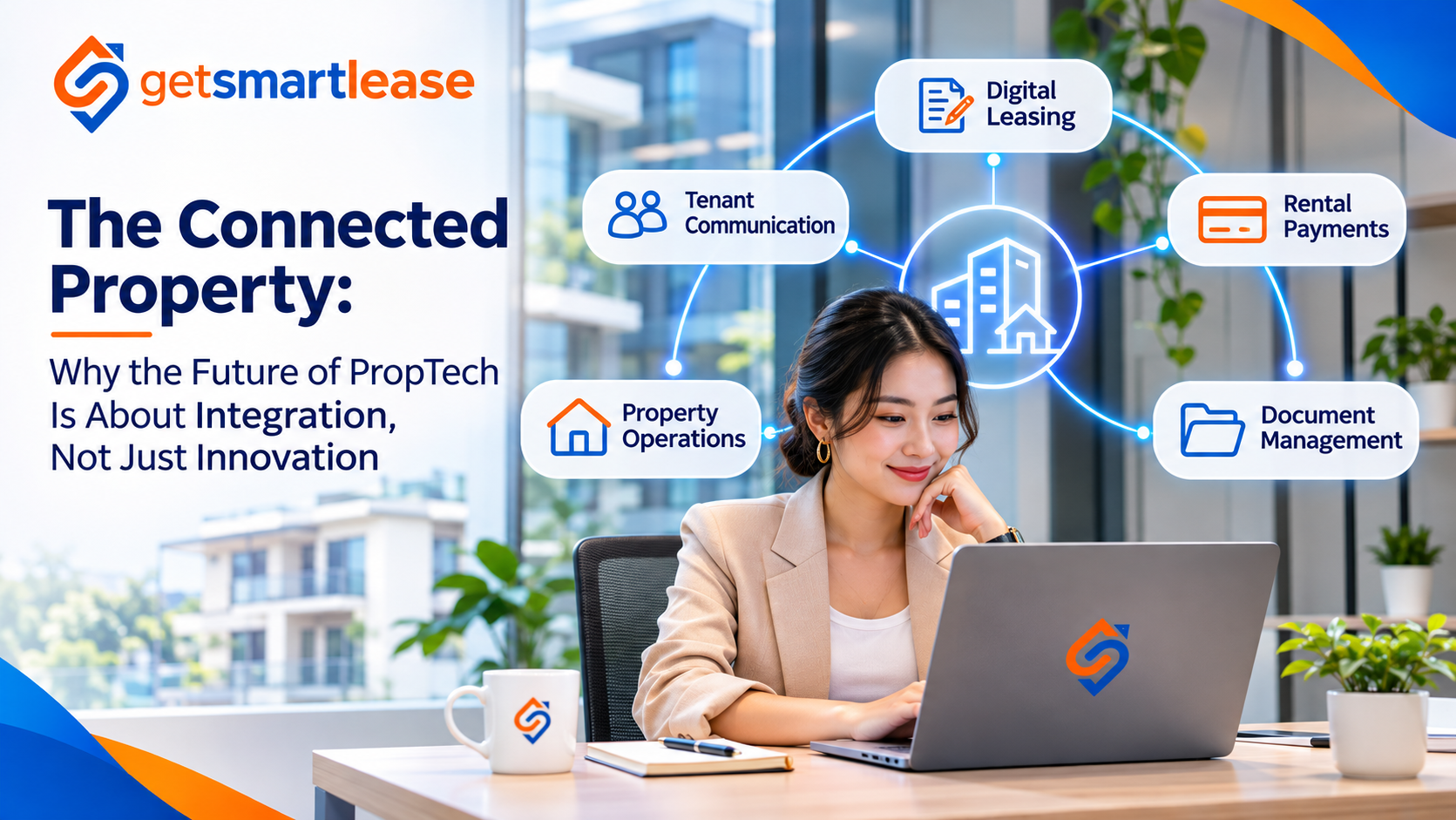
Property technology has transformed how rental properties are marketed, leased, managed, and maintained. From digital applications and electronic lease agreements to online payments and automated communication, technology has introduced new possibilities across the rental lifecycle.
However, adopting more technology does not automatically create better operations.
Many property managers still work with disconnected platforms, duplicate information, and fragmented processes. Although each tool may solve an individual problem, managing them together can introduce unnecessary complexity.
The next stage of property technology is not simply about introducing more digital solutions. It is about making those solutions work together.
1. The Challenge of Disconnected Property Technology
A property management team may use separate systems for tenant applications, lease agreements, payment processing, document storage, and customer communication.
When these systems operate independently, property managers may experience:
Repeated manual data entry.
Inconsistent tenant and property records.
Delays in updating payment and lease statuses.
Difficulty tracking responsibilities across departments.
Increased administrative workload.
These challenges demonstrate why digital adoption alone is not enough. Technology must also support operational continuity.
2. Creating a Connected Rental Lifecycle
An integrated property technology ecosystem allows information to move naturally between different stages of the rental journey.
For example, when a prospective tenant submits an application, the relevant information can flow into subsequent processes, including application approval, lease preparation, payment requests, and property allocation.
Instead of treating each stage as an independent task, connected technology creates a continuous workflow.
This approach can reduce duplication, minimise errors, and provide greater visibility into the progress of every tenancy.
3. Turning Property Data into Meaningful Insights
Property businesses generate valuable information every day. However, when data is scattered across multiple platforms, identifying meaningful patterns becomes difficult.
Connected property technology can help managers better understand:
Property occupancy and availability.
Rental payment performance.
Upcoming lease expirations.
Tenant service requests.
Operational bottlenecks.
Portfolio performance.
By bringing relevant information together, property managers can make more informed decisions without spending unnecessary time collecting and reconciling records.
4. Improving the Tenant Experience Through Integration
Tenants should not have to understand the complexity of the systems operating behind their rental experience.
They expect a straightforward journey where applications, agreements, payments, documents, and communication are easily accessible.
Integrated property technology can support this experience by providing consistent information, reducing repeated requests for documents, and improving visibility into important rental activities.
A connected experience benefits both tenants and property managers by reducing confusion and unnecessary follow-ups.
5. Building Technology That Grows with the Business
As property portfolios expand, disconnected processes can become increasingly difficult to manage.
A connected technology ecosystem provides a stronger foundation for growth by supporting standardised workflows, centralised information, and consistent operational practices.
It can also make it easier to introduce future capabilities such as artificial intelligence, predictive analytics, intelligent automation, and advanced reporting.
Rather than continuously adding isolated tools, property businesses can focus on building a sustainable digital infrastructure.
6. Making Integration Secure and Reliable
Connecting property systems also introduces important responsibilities.
Property businesses must consider data protection, access permissions, information accuracy, system reliability, and secure communication between platforms.
Effective integration should ensure that the right information reaches the right people at the right time, without compromising tenant privacy or operational security.
The goal is not simply to connect everything, but to connect systems responsibly.
7. The GetSmartLease Perspective
At GetSmartLease, we believe property technology should simplify the rental lifecycle rather than introduce additional layers of complexity.
Bringing digital leasing, rental payments, document management, tenant communication, and property operations into a more connected environment can help property businesses establish efficient and transparent workflows.
The real value of PropTech lies not in the number of features available, but in how effectively technology supports everyday rental operations.
Conclusion
The future of property technology will not necessarily belong to businesses with the largest number of digital tools. It will belong to those that use technology effectively to create connected, reliable, and scalable rental experiences.
By prioritising integration, property managers can reduce operational friction, strengthen collaboration, improve tenant satisfaction, and prepare their businesses for future innovation.
The next evolution of PropTech is not about doing more with technology. It is about making technology work better together.
Discover more at GetSmartLease.