
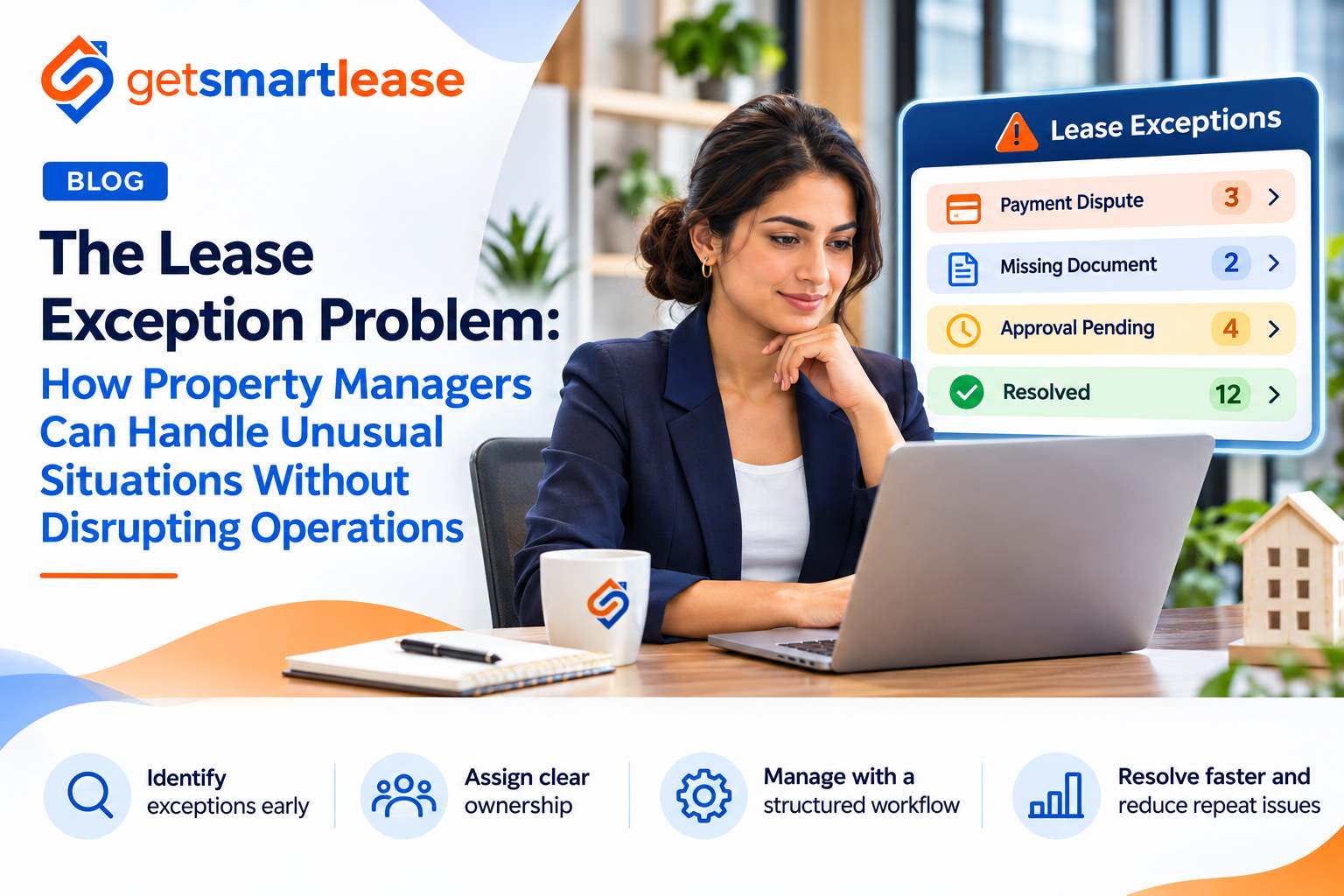
Not Every Lease Follows the Expected Process
Property management teams work hard to establish reliable processes for applications, lease agreements, rental payments, renewals, and terminations.
When everything goes according to plan, these processes help teams operate efficiently.
But real rental operations rarely follow a perfectly predictable path.
A tenant may request additional time to complete a payment. A document might require correction after signing. A disagreement could arise over an invoice, or a lease cancellation may involve unusual circumstances.
These situations create what we can call lease exceptions — events that fall outside the normal lease management workflow and require additional attention.
The challenge isn't simply resolving the exception. It's ensuring that one unusual situation doesn't create confusion, delays, or unnecessary administrative work across the entire operation.
1. Understand What Creates a Lease Exception
A lease exception occurs when an activity cannot proceed through the standard process without additional review, clarification, or action.
Common examples include:
Delayed or partially completed rental payments
Missing or incorrect lease documents
Requests to change agreed payment arrangements
Disputed invoices or charges
Unexpected early termination requests
Delays in lease approvals or signatures
Changes in tenant circumstances
Conflicting information between lease records
These situations may require decisions from property managers, finance teams, administrators, or other authorised individuals.
Without a clear process, exceptions can remain unresolved or move between teams without ownership.
2. Separate Routine Work From Exceptions
One of the biggest operational challenges is treating every lease activity as though it requires the same level of attention.
Routine activities should follow established workflows.
Exceptions, however, need additional visibility and sometimes human judgement.
For example, a rental payment completed successfully should not require the same level of investigation as a disputed payment.
By distinguishing between normal transactions and exceptional cases, property managers can focus their attention where it is most needed.
The objective is to reduce unnecessary manual intervention without losing control over important decisions.
3. Make Exceptional Situations Visible
When unusual lease situations are handled through separate emails, phone calls, and messages, tracking progress becomes difficult.
A property manager may know that an issue exists but not whether someone else is already addressing it.
A structured exception management process should help teams identify:
What happened
Which lease or tenant is affected
Why the situation requires attention
Who is responsible
What action is pending
Whether the issue has been resolved
This creates a clearer operational picture and reduces repeated follow-ups.
4. Assign Clear Ownership
An exception without an owner can quickly become a delayed task.
Consider a tenant disputing an additional rental charge.
The property manager may need to review the lease terms, while the finance team may need to verify the invoice and payment history.
If responsibilities aren't clearly assigned, both teams may assume the other is handling the issue.
A better process identifies the responsible person or team and defines the next action.
Clear ownership makes exceptions easier to manage and helps prevent unresolved cases from being overlooked.
5. Keep Exception Records Connected to the Lease
An unusual situation should not exist separately from the lease it affects.
For example, a payment dispute may involve the original agreement, invoices, payment confirmations, and previous communication.
If these records are scattered across different systems, resolving the issue becomes more time-consuming.
Connecting exception records with the relevant tenant, property, and lease helps property managers access the information needed to make informed decisions.
It also creates a useful history if similar questions arise later.
6. Establish a Consistent Resolution Workflow
Not every exception can be resolved automatically, but the process for handling it can still be structured.
A practical workflow might follow:
Exception Identified → Assigned → Under Review → Action Required → Resolved → Closed
Each stage provides visibility into the progress of the issue.
For example, a disputed charge may require document verification before a final decision can be made.
A structured workflow ensures that the necessary review takes place without allowing the case to disappear into an inbox.
7. Use Automation to Support Human Decisions
Automation is valuable for repetitive and predictable activities.
However, exceptional lease situations may require interpretation, negotiation, or consideration of individual circumstances.
Rather than attempting to automate every decision, property managers can use technology to support the process.
Digital workflows can help by:
Identifying incomplete activities
Highlighting overdue actions
Sending reminders
Organising supporting documents
Tracking resolution progress
Maintaining activity records
Human oversight remains important when contractual rights, financial decisions, or unusual tenant circumstances are involved.
The most effective approach combines automated coordination with informed human judgement.
8. Improve Communication During Exceptions
Unexpected situations can create uncertainty for tenants.
A tenant who has raised a payment dispute, requested a change, or reported an issue may not know what happens next.
Even when the final decision requires time, clear communication can improve the experience.
Property managers should aim to communicate:
That the request has been received
Whether additional information is required
Who is reviewing the matter
What the next step involves
When an update can reasonably be expected
Keeping communication consistent helps reduce repeated enquiries and unnecessary frustration.
9. Identify Patterns Behind Repeated Exceptions
Individual exceptions can also reveal larger operational problems.
For example, frequent invoice disputes may indicate unclear payment communication.
Repeated document corrections may suggest weaknesses in the lease preparation process.
Delays in approvals may reveal unclear responsibilities between teams.
By reviewing recurring exceptions, property managers can identify opportunities to improve standard workflows.
Useful indicators may include:
Number of open exceptions
Average resolution time
Most common exception categories
Repeated issues affecting the same process
Cases requiring escalation
Outstanding actions by responsible team
This information can help organisations move from repeatedly resolving problems to preventing avoidable ones.
10. Build Flexibility Into Lease Management
Standardised processes are essential for efficient property management.
However, systems also need enough flexibility to accommodate situations that don't fit the usual workflow.
A process that is too rigid may force teams to manage exceptions outside the system.
A process that is too informal may create inconsistent decisions and incomplete records.
The better approach is to maintain structured workflows while allowing authorised teams to review and resolve unusual situations appropriately.
This creates a balance between operational efficiency and practical flexibility.
From Reactive Problem-Solving to Structured Exception Management
Lease exceptions are a normal part of rental property operations.
The goal should not be to eliminate every unusual situation, because some circumstances cannot be predicted or prevented.
Instead, property managers should focus on making exceptions easier to identify, assign, investigate, and resolve.
When exception handling is connected to lease information, payments, documents, and tenant communication, teams gain greater visibility and control.
They can spend less time searching for information and more time resolving the issues that genuinely require attention.
How GetSmartLease Supports More Connected Lease Operations
GetSmartLease helps property managers organise essential rental activities through connected lease, tenant, property, document, and payment information.
A centralised approach provides a stronger foundation for investigating unusual situations and maintaining consistent records throughout the tenancy.
By bringing relevant information together, property teams can reduce fragmented administration and gain clearer visibility into ongoing rental activities.
As property management becomes increasingly digital, the opportunity is not simply to automate standard processes.
It is also to make exceptional situations easier to manage.
Conclusion: Better Lease Management Includes the Unexpected
Efficient lease management isn't measured only by how smoothly routine activities are completed.
It also depends on how effectively teams respond when something unexpected happens.
With clear ownership, structured workflows, connected information, and consistent communication, property managers can handle lease exceptions without unnecessarily disrupting normal operations.
Because smarter lease management isn't just about following the process — it's about knowing what to do when the process needs extra attention.
GetSmartLease — Smart Leases. Stronger Relationships.
Visit: https://blog.getsmartlease.com/