
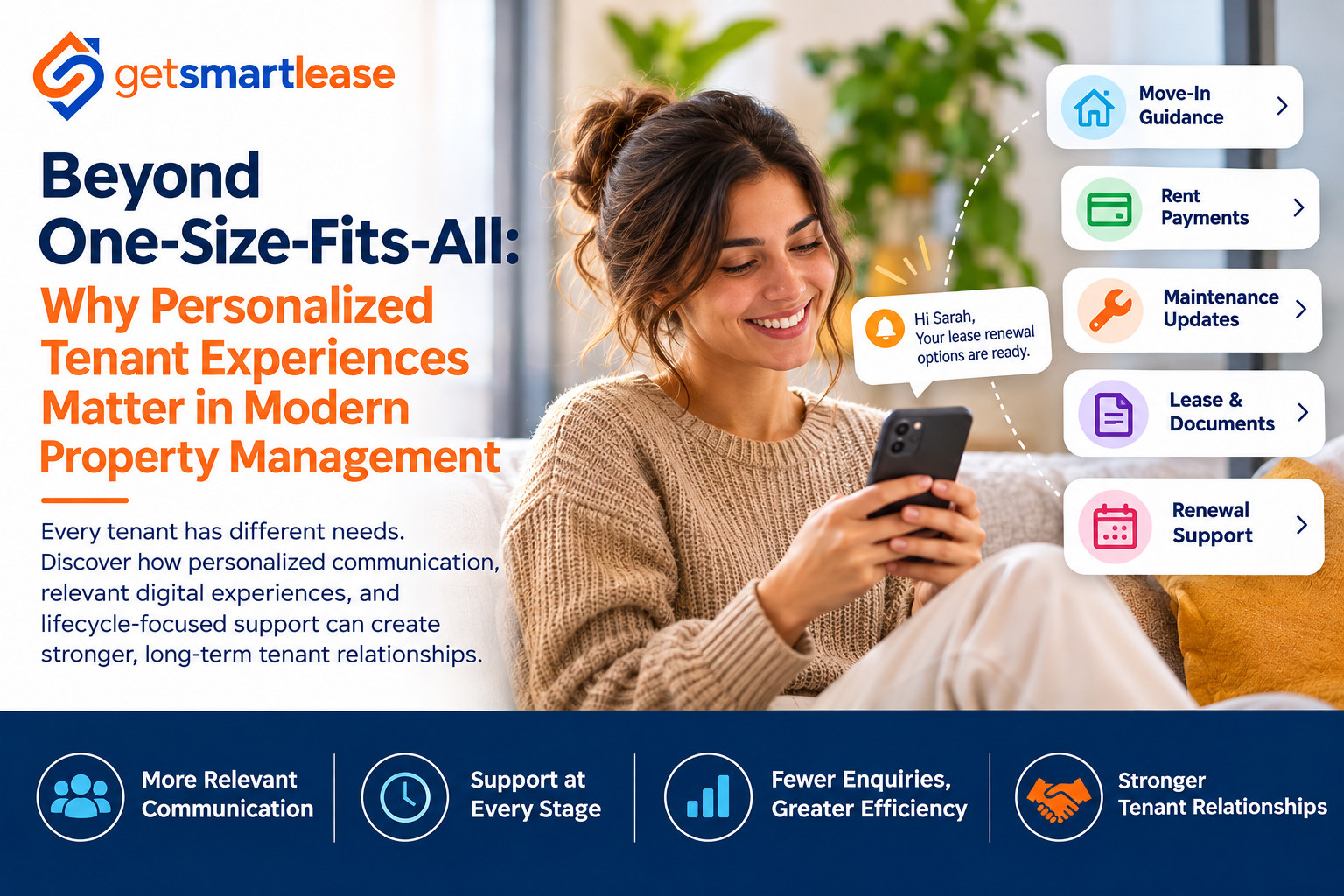
Every Tenant Has Different Expectations
No two tenants experience renting in exactly the same way.
A young professional may prioritize convenient digital payments and quick access to lease documents.
A family moving into a new home may need detailed move-in guidance and clear maintenance communication.
A long-term resident may value proactive renewal discussions and reliable support.
Although their needs differ, they all expect a rental experience that is convenient, transparent, and dependable.
For property managers, this creates an important opportunity.
Instead of delivering the same experience to every tenant, property management teams can create more personalized interactions while maintaining consistent service standards.
Personalization doesn't require complicated technology or collecting excessive personal information.
Often, it starts with understanding what tenants need, when they need it, and how they prefer to interact.
1. Understand That Tenants Have Different Needs
Traditional property management processes often follow a standardized approach.
Every tenant receives the same reminders, follows the same communication process, and receives similar information regardless of their situation.
Standardization is important for consistency, fairness, and compliance. However, not every tenant needs the same level of assistance at every stage.
Consider three situations:
New tenants: May need onboarding instructions, document access, and guidance about payments.
Existing tenants: May primarily need convenient payments, maintenance support, and important property updates.
Tenants approaching renewal: May need clear renewal options, timelines, and updated lease information.
Recognizing these differences helps property managers deliver more relevant support.
The objective isn't to create entirely separate processes for everyone.
It's to make existing processes more responsive to the tenant's current needs.
2. Personalize Communication Without Overcomplicating It
Communication is one of the easiest places to introduce personalization.
A generic message may communicate essential information, but a relevant, timely message can make the experience more useful.
For example, instead of sending every tenant the same lease reminder, property managers can send notifications based on actual lease expiration dates.
Similarly, maintenance updates should relate to the tenant's specific request rather than generic property announcements.
Personalized communication can include:
Relevant payment reminders
Lease-specific notifications
Maintenance request updates
Move-in instructions
Renewal information
Property-specific announcements
Personalization should also respect communication preferences where practical.
Some tenants may prefer email for detailed documents, while others may find mobile notifications more convenient for routine updates.
The goal is to deliver the right information to the right tenant at the right time.
3. Make Digital Experiences Relevant
Tenant portals and mobile applications can make everyday rental activities more convenient.
But simply offering digital access doesn't automatically create a personalized experience.
The information tenants see should be relevant to their tenancy.
For example, a useful tenant dashboard might prioritize:
Current lease information
Upcoming rental payments
Outstanding payment items
Recent transactions
Important documents
Active maintenance requests
Upcoming renewal activities
A tenant with no outstanding payments shouldn't need to navigate through unnecessary payment warnings.
Similarly, a tenant with an active renewal request should be able to understand its status without searching through unrelated information.
A relevant digital experience reduces unnecessary navigation and helps tenants focus on what matters.
4. Recognize Important Moments in the Tenant Lifecycle
Personalization becomes especially valuable during important rental milestones.
Different stages of the tenancy create different expectations.
During Move-In
Provide essential information, access instructions, and relevant support.
During Active Tenancy
Focus on convenient payments, maintenance, documents, and everyday communication.
During Maintenance
Provide updates specific to the reported issue and explain the next steps.
Before Lease Expiration
Communicate renewal timelines and available options early.
During Move-Out
Provide clear instructions about notices, inspections, outstanding obligations, and relevant documentation.
By aligning communication and services with these milestones, property managers can make the tenant journey feel more organized and relevant.
5. Use Tenant Feedback to Understand Preferences
Personalization shouldn't depend on assumptions.
Property managers may believe they understand what tenants want, but preferences can vary.
Short feedback questions can reveal useful information.
For example:
"Which communication channel is most convenient for routine updates?"
"Was the information provided during move-in helpful?"
"What would make your rental experience easier?"
"Are there any recurring difficulties with our current processes?"
Feedback can help property managers identify where flexibility would be useful.
It can also reveal when a standardized process is already working well.
The most effective approach combines tenant feedback with actual operational observations.
6. Balance Automation With Personal Attention
Automation can support personalized experiences without requiring property managers to manually manage every interaction.
For example:
Lease approaching expiration → Send relevant renewal reminder
Payment completed → Provide payment confirmation
Maintenance request updated → Notify the affected tenant
Document available → Inform the relevant resident
These interactions are personalized because they respond to specific events.
However, not every situation should be handled through automated messages.
Complex complaints, sensitive concerns, disputes, and unusual circumstances often require human judgment.
Automation should simplify predictable activities while allowing property managers to provide personal support when needed.
7. Avoid Unnecessary Notifications
Personalization isn't about sending more messages.
In fact, excessive communication can make the tenant experience worse.
A tenant receiving repeated reminders for an already completed payment may lose confidence in the system.
Similarly, irrelevant property notices can make important information easier to overlook.
Property management teams should focus on notification relevance.
Before sending an automated message, consider:
Is the information relevant to this tenant?
Is the message necessary?
Has the action already been completed?
Does the tenant need to do something?
Is this the appropriate communication channel?
Useful communication builds confidence. Unnecessary communication creates noise.
8. Protect Tenant Privacy
Personalization should never come at the expense of tenant privacy.
Property managers may handle sensitive information involving identities, contact details, leases, and financial transactions.
Personalized services should use only the information reasonably necessary for the intended purpose.
Good practices include:
Limiting access to tenant information
Using secure systems for documents and payments
Avoiding unnecessary collection of personal data
Respecting communication preferences
Following applicable data protection requirements
Maintaining appropriate access controls
For property management businesses operating in South Africa, the Protection of Personal Information Act (POPIA) is an important consideration.
Trust depends not only on convenient service but also on responsible information handling.
9. Personalization Can Improve Operational Efficiency
Personalized experiences aren't beneficial only for tenants.
They can also help property management teams operate more efficiently.
When tenants receive relevant information at the right time, they may need fewer follow-up conversations.
When digital dashboards display appropriate information, residents can complete routine tasks more independently.
When notifications respond to actual events, teams can reduce unnecessary manual communication.
These improvements can contribute to:
Fewer repetitive enquiries
More relevant tenant communication
Better workflow visibility
Improved administrative efficiency
Stronger tenant relationships
The objective is to make service more relevant without making operations more complicated.
10. Measure Whether Personalization Actually Helps
Not every personalized feature creates a better experience.
Property managers should evaluate whether changes are genuinely useful.
Potential indicators include:
Reduced repeated enquiries
Fewer unnecessary support requests
Improved tenant feedback
Better completion rates for routine tasks
Fewer missed communications
More efficient renewal processes
These indicators can help determine whether personalization is improving the rental experience or simply adding complexity.
The best improvements are those that make life easier for both tenants and property teams.
The Future of Tenant Experience Is Relevant, Not Just Digital
Digital property management has made many rental activities faster and more accessible.
But the next opportunity is making those interactions more relevant.
A tenant shouldn't need to search through unrelated information to find an important document.
They shouldn't receive reminders for actions they've already completed.
And they shouldn't have to repeatedly explain their circumstances when contacting property management.
A better experience recognizes the tenant's current situation and provides clear, appropriate next steps.
This doesn't mean abandoning standardized processes.
It means combining consistent service standards with relevant, timely, and flexible interactions.
Creating More Relevant Tenant Experiences With GetSmartLease
Modern property management requires more than managing properties and collecting rent.
It requires understanding the activities and interactions that shape each tenancy.
GetSmartLease helps connect essential rental processes, including tenant applications, lease management, payments, and documents, within a more organized digital environment.
Connected information and workflows can help property management teams provide clearer, more relevant experiences throughout the tenant lifecycle.
When technology reduces unnecessary administration and improves access to information, property managers can focus more attention on meaningful tenant relationships.
Because a great tenant experience isn't about treating everyone differently.
It's about giving every tenant the right support at the right time.
Explore GetSmartLease: https://getsmartlease.com/