
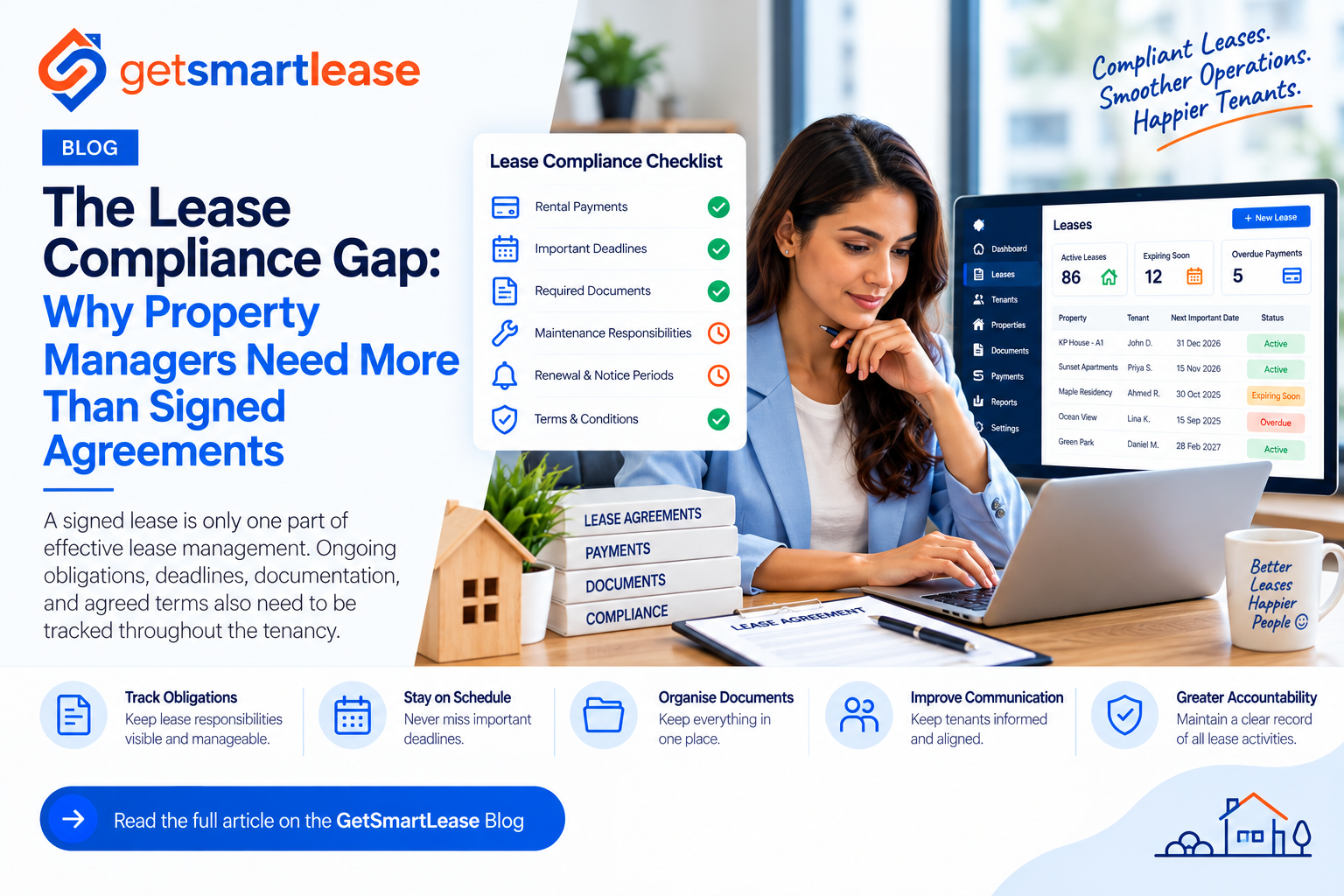
Introduction: A Signed Agreement Doesn't Guarantee Compliance
A lease agreement establishes the responsibilities and expectations of both property managers and tenants.
However, signing the document doesn't automatically ensure that every obligation will be fulfilled throughout the tenancy.
Rental payment deadlines, maintenance responsibilities, notice periods, document requirements, and other contractual conditions all require ongoing attention.
When these obligations are managed through spreadsheets, emails, and manual reminders, important details can easily be overlooked.
This creates what we can call the lease compliance gap — the difference between what the lease requires and what is actually being monitored and managed.
Closing this gap requires more than digital signatures. It requires a connected approach to lease management.
1. Understand the Responsibilities Within Every Lease
Every lease contains terms that define what tenants and property managers are expected to do.
These may include:
Monthly rental payment obligations
Security deposit requirements
Property maintenance responsibilities
Lease commencement and expiry dates
Notice periods
Property usage conditions
Inspection arrangements
Renewal and termination procedures
While these conditions are documented in the agreement, they may not always be visible during daily property operations.
A structured lease management process makes important obligations easier to identify and track.
2. Move Beyond Document Storage
Many property management teams have already moved from paper agreements to digital documents.
This is an important improvement, but simply storing a PDF does not guarantee effective lease management.
For example, a lease may specify a particular notice period, but if that information remains buried inside a document, the team may overlook it when handling a cancellation request.
Digital lease management should help property managers access relevant information without repeatedly searching through agreements.
The goal is to turn lease information into actionable operational knowledge.
3. Make Important Deadlines Visible
Lease compliance often depends on completing the right action at the right time.
Missing a deadline can create operational complications and potentially contractual disputes.
Important milestones may include:
Rental due dates
Lease expiration dates
Renewal notification deadlines
Cancellation notice periods
Scheduled inspections
Required document submissions
A centralised view of upcoming obligations allows property managers to plan ahead rather than respond after a deadline has passed.
Automated reminders can further support this process when properly configured.
4. Maintain Accurate Payment Records
Rental payments are among the most important ongoing responsibilities within a lease.
Property managers need visibility into whether payments are due, pending, completed, or overdue.
When payment records are disconnected from lease information, teams may spend unnecessary time matching transactions with tenants and properties.
Connecting rental transactions with the appropriate lease records can improve financial visibility.
It also helps teams respond more efficiently when tenants have questions about invoices or payment history.
5. Keep Lease Documents Organised and Accessible
Lease-related documentation can grow significantly throughout a tenancy.
Alongside the original agreement, property managers may need to maintain:
Signed and counter-signed agreements
Payment invoices
Payment confirmations
Supporting tenant documents
Lease amendments
Renewal agreements
Cancellation notices
Termination records
Keeping these documents organised under the correct tenant, property, and lease makes it easier to retrieve information when required.
Proper document management also supports clearer recordkeeping and accountability.
6. Track Changes Without Losing Accountability
Lease conditions may change during a tenancy.
For example, rental amounts may be adjusted, agreements may be extended, or additional terms may be introduced.
When changes are communicated informally, teams can lose track of which conditions currently apply.
A structured process should preserve the original agreement, record approved changes, and make the latest applicable terms clear.
Maintaining this history helps property managers understand how an agreement has evolved.
7. Improve Communication Around Lease Obligations
Tenants may not always remember every condition included in their agreement.
Similarly, property managers may need to communicate upcoming actions, document requirements, or changes to rental arrangements.
Clear communication can prevent misunderstandings before they become larger issues.
Digital tenant portals and structured communication processes can make it easier to share relevant information and provide visibility into ongoing rental activities.
When tenants understand what is expected and when action is required, the overall rental experience becomes more predictable.
8. Create a Clear Record of Important Actions
When questions or disagreements arise, having a reliable history of lease-related activity becomes valuable.
Property managers may need to establish:
When an invoice was issued
Whether a payment was received
When a notice was submitted
Which documents were signed
When an agreement was updated
What decisions were made during the tenancy
Maintaining accurate records makes these questions easier to answer.
It can also reduce dependence on individual employees' inboxes or personal spreadsheets.
9. Use Digital Workflows to Reduce Manual Oversight
Traditional lease administration often depends on someone remembering to check dates, verify documents, or follow up on outstanding actions.
As the number of managed properties grows, this approach becomes increasingly difficult to maintain.
Structured digital workflows can help by connecting related activities and making pending tasks visible.
For example, a cancellation process may involve reviewing notice requirements, confirming the lease status, recording approvals, and updating relevant information.
A connected workflow reduces the need to coordinate each step manually.
10. Build Compliance Into Everyday Lease Management
Effective lease compliance should not depend entirely on periodic document reviews.
Instead, relevant obligations should become part of everyday property management activities.
This means ensuring that lease information, payments, documents, deadlines, and tenant communication remain connected.
Property managers can then identify outstanding responsibilities more easily and respond before small issues become significant problems.
Importantly, digital systems support compliance management but do not replace professional legal advice or jurisdiction-specific regulatory requirements.
The Future of Lease Management Is Proactive
Property management is moving beyond simply maintaining digital copies of agreements.
The next step is making lease information more useful throughout the tenancy.
By connecting contractual obligations with daily operational processes, property managers can gain better visibility into responsibilities, deadlines, and outstanding actions.
This approach can reduce administrative effort, improve accountability, and support more consistent rental management.
How GetSmartLease Supports Smarter Lease Management
GetSmartLease brings essential rental management activities together in a connected digital environment.
By organising lease information, tenant records, documents, rental transactions, and related workflows, GetSmartLease helps property managers maintain clearer visibility throughout the rental lifecycle.
A more connected approach makes it easier to understand what has been completed, what remains outstanding, and where attention may be needed.
Because effective lease management isn't just about having an agreement in place.
It's about making sure the agreement remains manageable throughout the entire tenancy.
Conclusion
A signed lease provides the foundation for a rental relationship, but ongoing management determines how effectively that agreement is administered.
With better visibility, organised documentation, structured processes, and connected information, property managers can reduce compliance gaps and manage rental obligations more confidently.
Manage smarter. Stay organised. Build stronger rental relationships with GetSmartLease.