
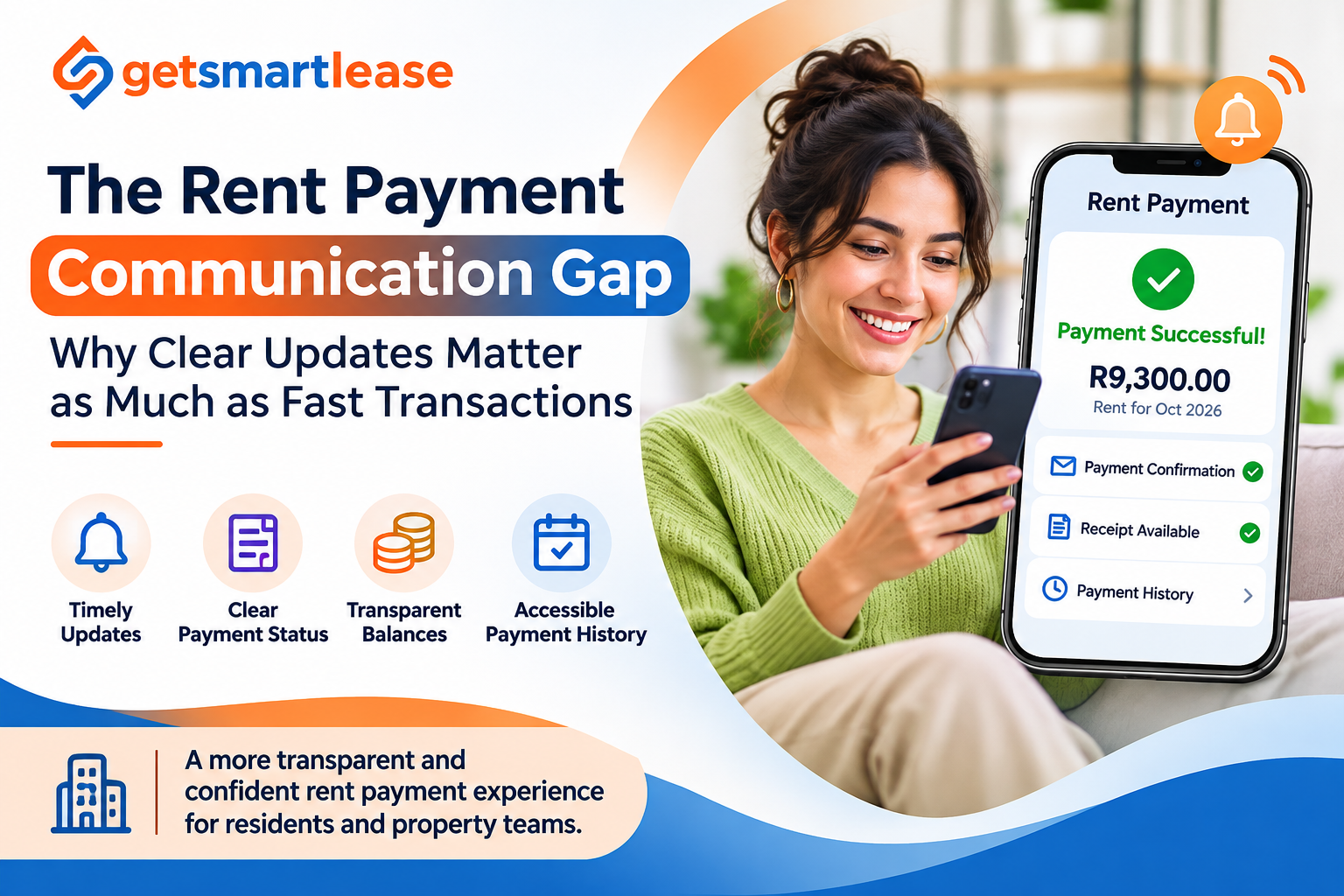
Making rent payments digitally is becoming increasingly common in property management. Residents can initiate payments online, property managers can monitor transactions, and automated systems can reduce manual administrative work.
But even when the payment process is digital, one important challenge remains: communication.
What happens when a resident completes a payment but does not receive confirmation? What if a transaction is still processing, but the property manager assumes it has failed? What happens when an outstanding balance appears without a clear explanation?
These situations highlight a common problem in rental operations: the rent payment communication gap.
A successful payment experience is not only about moving money efficiently. It is also about keeping residents and property teams informed throughout the transaction journey.
1. Why Payment Communication Matters
Rent payments are among the most important recurring interactions between residents and property managers.
Residents want to know that their payments have been received, while property managers need accurate information to maintain financial records.
When communication is unclear, even a technically successful transaction can create uncertainty.
Common challenges include:
Residents repeatedly checking whether payments were received.
Property managers manually confirming transactions.
Confusion about pending or unsuccessful payments.
Delays in issuing payment receipts.
Disagreements about outstanding balances.
Clear communication can reduce these problems and create greater confidence in the payment process.
2. The Problem With Payment Status Uncertainty
Imagine a resident making a rent payment through an online portal.
The payment is submitted, but the screen does not clearly indicate whether the transaction succeeded.
The resident may wonder:
Has the payment gone through? Should I try again? Will I be charged twice?
Meanwhile, the property manager may not yet see the transaction reflected in the rental account.
This uncertainty can lead to unnecessary support requests and duplicate payment attempts.
A well-designed digital payment experience should distinguish between statuses such as:
Payment Initiated: The payment request has been submitted.
Payment Processing: The transaction is being processed, and final confirmation is pending.
Payment Successful: The payment has been confirmed.
Payment Failed: The transaction was unsuccessful, and further action may be required.
Clear status information helps everyone understand what is happening and what to do next.
3. Automated Confirmations Build Confidence
Residents should not have to contact property managers every time they need payment confirmation.
Automated payment notifications can provide timely updates when important events occur.
For example, a connected payment system may send notifications when:
A payment is initiated.
A transaction is successfully completed.
A payment fails.
A receipt becomes available.
A scheduled payment is approaching.
These notifications can reduce manual communication while helping residents stay informed.
However, automation should not mean sending excessive messages. Notifications should be relevant, accurate, and easy to understand.
4. Making Outstanding Balances Easier to Understand
An outstanding balance without supporting information can create confusion.
Residents may not immediately understand whether the amount relates to monthly rent, additional charges, unpaid fees, or an earlier transaction.
Digital payment platforms can improve transparency by displaying a clear breakdown of charges.
For example:
| Charge Description | Amount |
|---|---|
| Monthly Rent | R8,500 |
| Parking Fee | R500 |
| Wi-Fi Fee | R300 |
| Total Due | R9,300 |
Illustrative example.
Providing this level of detail helps residents understand their financial obligations before making payments.
It can also reduce disputes and repetitive questions directed to property management teams.
5. Connecting Payment Updates With Property Management Workflows
Payment communication becomes more effective when it is connected to the wider property management process.
Consider a rental journey where:
A resident receives a notification about an upcoming payment.
The resident reviews the outstanding balance.
The payment is initiated through a digital portal.
The transaction status is updated as processing progresses.
A confirmation is issued when payment succeeds.
The payment record becomes available for future reference.
When these steps are connected, residents have greater visibility, and property managers can spend less time providing individual payment updates.
The goal is not simply to automate transactions but to create a consistent flow of reliable information.
6. Handling Failed Payments With Clear Next Steps
A failed payment does not always mean a resident is unwilling to pay.
Transactions may fail because of insufficient funds, incorrect payment details, temporary processing issues, or other technical problems.
An unclear failure message can make the situation more frustrating.
Instead of displaying a generic error, a digital payment system should provide helpful information whenever it is available.
For example:
Clearly indicate that the payment was unsuccessful.
Explain the reason when the payment provider supplies one.
Avoid suggesting a retry while the original transaction remains uncertain.
Provide a secure way to attempt payment again when appropriate.
Offer a support option for unresolved problems.
Clear guidance helps residents resolve payment issues without unnecessary delays.
7. Improving Trust Through Payment History
Payment history is an important part of the resident experience.
Residents should be able to review previous transactions without repeatedly requesting information from property managers.
A well-organized payment history may include:
Transaction dates.
Amounts paid.
Payment references.
Payment statuses.
Downloadable receipts.
Outstanding balances.
This information supports transparency and makes it easier to resolve questions about earlier payments.
For property managers, accessible transaction records can also simplify administrative reviews and resident communication.
8. How Better Communication Supports Property Teams
Improving payment communication benefits more than residents.
Property management teams can also gain operational advantages.
Clear payment updates may help teams:
Reduce repetitive enquiries: Residents can check payment information independently.
Improve payment follow-ups: Teams can focus on transactions requiring attention.
Minimize misunderstandings: Accurate records provide a common reference.
Save administrative time: Automated notifications reduce manual communication.
Improve service quality: Residents receive timely information without waiting for individual responses.
Together, these improvements can make rent collection more efficient and predictable.
9. The Future of Smart Payments Is Transparent
As digital property management continues to evolve, payment platforms will need to deliver more than transaction processing.
The next stage of smart payments involves combining automation, accurate records, timely communication, and clear payment visibility.
Residents increasingly benefit from knowing not only whether a payment was completed but also what is happening at every important stage.
For property managers, this means building payment workflows that are understandable, traceable, and connected to daily operations.
Conclusion
Fast payment processing is important, but speed alone does not create a great rental payment experience.
Residents also need clear confirmations, understandable balances, accessible records, and guidance when transactions do not go as expected.
By closing the payment communication gap, property managers can reduce confusion, improve transparency, and create a smoother experience for everyone involved.
The smartest rent payment experience is not just fast. It keeps everyone informed.
At GetSmartLease, we believe connected digital property management should make everyday rental processes simpler, clearer, and more efficient.
Explore more insights at https://blog.getsmartlease.com/