
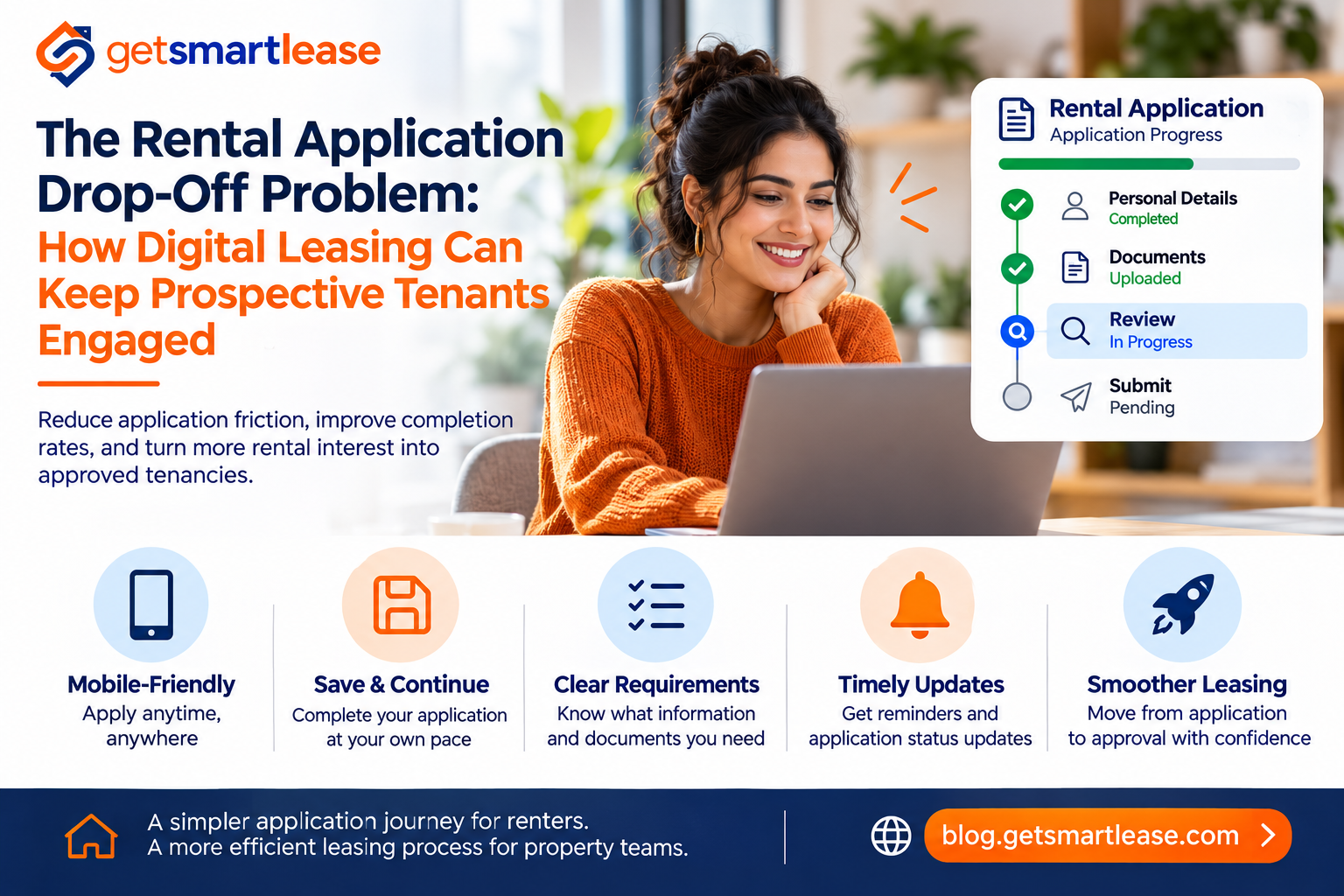
When Rental Interest Doesn't Turn Into Applications
Attracting prospective tenants is an important part of property management. But generating interest is only the beginning of the leasing journey.
A prospective tenant may find a suitable property, review the rental details, and begin an online application with genuine interest.
Then something happens.
The application requires information they don't have immediately. A document upload fails. The form is too long. They aren't sure whether their progress has been saved.
Instead of completing the application, they leave.
For property managers, this creates a hidden challenge: prospective tenants who show interest but never complete the application process.
Digital leasing offers an opportunity to address this problem by making rental applications simpler, more transparent, and easier to complete.
1. Understand Why Prospective Tenants Abandon Applications
Application abandonment doesn't always mean a prospective tenant has lost interest in the property.
Sometimes the process itself creates unnecessary barriers.
Common reasons include:
Lengthy or complicated application forms
Unclear document requirements
Poor mobile usability
Repeated requests for the same information
Technical errors during submission
No option to save progress
Uncertainty about what happens after applying
Each obstacle increases the effort required to complete the application.
A better digital leasing experience focuses on removing these barriers before they become reasons to leave.
2. Make Rental Applications Mobile-Friendly
Many prospective tenants explore rental properties using smartphones.
They may discover a listing while commuting, during a lunch break, or while browsing at home.
If the application process only works comfortably on a desktop computer, completing it can become inconvenient.
Mobile-friendly digital leasing should provide readable forms, simple navigation, accessible document uploads, and clear validation messages.
The goal is to let prospective tenants complete the application using the device that works best for them.
3. Allow Applicants to Save and Continue Later
Not every applicant has all the required information available when they begin.
They may need to locate identification documents, bank statements, employment details, or other supporting information.
If the system requires everything to be completed in one session, applicants may have to restart the process later.
A save-and-resume feature can make a significant difference.
Applicants can begin the application, save their progress, gather missing information, and return when they're ready.
This creates a more flexible experience without removing important application requirements.
4. Show Application Progress Clearly
Long application forms can feel overwhelming when users don't know how much work remains.
A clear progress indicator can make the process easier to understand.
For example:
Step 1: Personal Information
Step 2: Employment and Financial Details
Step 3: Supporting Documents
Step 4: Review and Submit
Breaking the process into manageable stages helps applicants understand what they've completed and what remains.
It also gives property teams an opportunity to organize information more consistently.
5. Make Document Requirements Clear From the Beginning
Document collection is often one of the most challenging parts of rental applications.
Prospective tenants may be unsure which documents are required, what file formats are accepted, or whether their uploads were successful.
A digital leasing workflow should communicate requirements clearly.
For example:
Required: Proof of identification
Accepted formats: PDF, JPG, PNG
Upload status: Successfully received
Clear instructions and immediate confirmation can reduce unnecessary errors and repeated submissions.
6. Use Timely Reminders Without Overwhelming Applicants
Sometimes applicants simply forget to finish.
They may have been interrupted or needed additional time to gather documents.
When appropriate and with suitable communication preferences, automated reminders can help them return to an incomplete application.
For example:
"Your rental application is almost complete. You can return to finish the remaining steps."
The reminder should be helpful rather than excessive.
A well-designed follow-up process respects the applicant's time while keeping the opportunity to complete the application open.
7. Reduce Repetitive Information Requests
Repeatedly asking applicants for the same details creates unnecessary friction.
For example, information already entered into an application shouldn't need to be manually re-entered during later stages unless verification or an update is necessary.
Connected digital workflows can reuse relevant information across application review, lease preparation, and onboarding.
This reduces repetitive work for applicants and administrative effort for property teams.
8. Provide Immediate Confirmation After Submission
Submitting a rental application is an important moment.
Applicants want to know whether the information was received successfully.
Without confirmation, they may submit the application again or contact the property team to check.
A clear submission message can include:
Confirmation that the application was received
An application reference number
The current application status
Information about the next stage
How to contact the property team if assistance is required
This creates confidence and sets expectations from the beginning.
9. Help Property Teams Identify Where Applications Stall
Application abandonment is not only a tenant experience issue. It can also reveal opportunities to improve leasing operations.
Property teams can benefit from understanding where applicants encounter difficulties.
Useful indicators may include:
Metric | What it reveals |
|---|---|
Applications started | Initial rental interest |
Applications completed | Successful submissions |
Application completion rate | How often started applications are finished |
Most common exit stage | Where applicants may encounter friction |
Average completion time | Effort required to apply |
Incomplete document submissions | Potential document-related barriers |
These insights can help teams identify areas for improvement rather than relying on assumptions.
10. Connect Application Completion With the Next Leasing Stage
A completed application shouldn't create another period of uncertainty.
Once submitted, the application should move into a clear review process.
Prospective tenants benefit from knowing their application has been received and whether additional information is required.
Property teams benefit from being able to identify newly submitted applications and prioritize the appropriate next actions.
This creates a smoother transition from application completion to review, approval, and lease preparation.
Why Reducing Application Friction Matters
A complicated application process can discourage prospective tenants before the rental relationship even begins.
By simplifying forms, improving mobile usability, clarifying document requirements, and providing better communication, property teams can make the application experience more accessible.
The benefits can include:
For property teams: More complete submissions, fewer repetitive enquiries, clearer application tracking, and less administrative rework.
For prospective tenants: Greater convenience, fewer interruptions, clearer instructions, and more confidence throughout the process.
Not every incomplete application can or should be recovered. Some applicants may simply change their plans or decide that a property isn't suitable.
The goal is to prevent unnecessary process friction from becoming the reason an interested applicant leaves.
The Future of Digital Leasing Starts With Better Applications
Digital leasing isn't only about signing agreements electronically or moving rental paperwork online.
It begins much earlier—with the first interaction between a prospective tenant and the application process.
A well-designed digital application should be easy to start, simple to understand, flexible enough to accommodate interruptions, and clear about what happens next.
For property teams, reducing unnecessary application barriers can help create a more efficient leasing pipeline.
For tenants, it creates a better first impression and a more convenient path toward their next home.
The best digital leasing experience doesn't just make applications available online. It makes them easier to complete.