
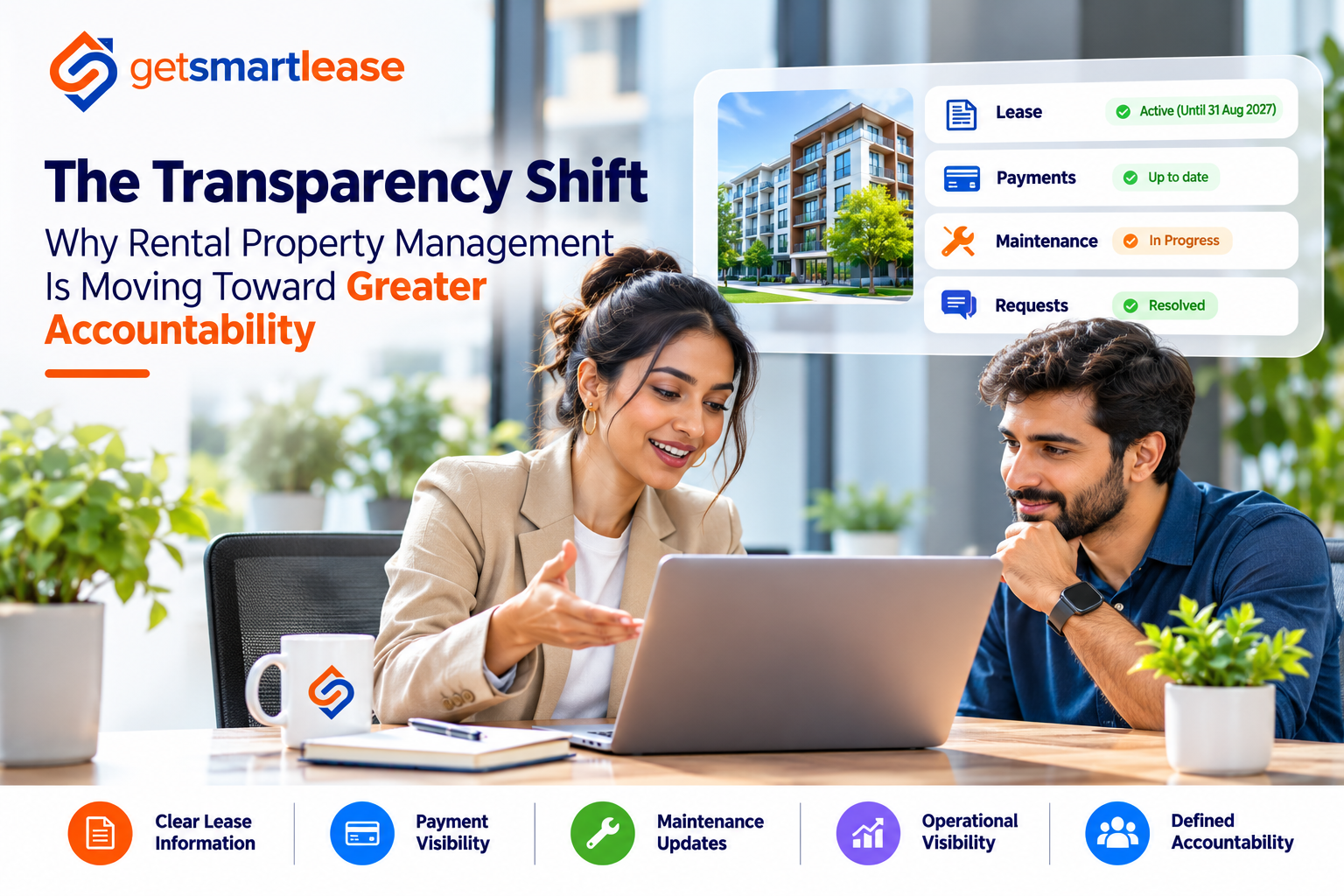
Property management has traditionally involved multiple stakeholders, including property owners, managers, tenants, and service providers.
Each stakeholder needs different information, but they all share one expectation: clear, accurate, and timely updates.
For years, much of this information was communicated through phone calls, emails, spreadsheets, and paper documents.
While these methods remain useful, they can create gaps in communication and make it difficult to understand the current status of important activities.
Today, digital technology is helping the rental industry move toward a more transparent and accountable operating model.
The change isn't simply about making information available online.
It's about ensuring that the right people have access to the right information at the right time.
1. Transparency Is Becoming a Core Expectation
Modern consumers are accustomed to tracking transactions, reviewing account information, and receiving updates through digital platforms.
Rental housing is increasingly following the same direction.
Tenants want to understand their lease obligations, payment status, submitted requests, and important deadlines.
Property owners want visibility into occupancy, rental income, and property performance.
Property managers need reliable information to coordinate operations and make decisions.
When information is difficult to access, uncertainty increases.
Transparent systems can help reduce unnecessary follow-ups while creating a more predictable experience for everyone involved.
2. Lease Transparency Is More Than Providing a Signed Agreement
A lease agreement defines the relationship between a tenant and a property owner.
However, lease management involves much more than signing a document.
Throughout a tenancy, important information may include:
Lease start and end dates
Monthly rental amounts
Deposit requirements
Payment obligations
Renewal conditions
Notice periods
Amendments and updated agreements
When this information is scattered across emails and documents, misunderstandings can occur.
Digital lease management can help organize these details and make relevant information easier to access.
This creates a clearer foundation for the entire rental relationship.
3. Payment Visibility Builds Confidence
Rent payments are one of the most sensitive areas of property management.
Tenants want confirmation that their payments have been received and correctly recorded.
Property managers need to monitor outstanding balances, completed transactions, and payment history.
Property owners need reliable financial information.
A transparent payment process can provide clearer visibility into:
Payment due → Payment initiated → Transaction processed → Payment confirmed → Receipt available
When stakeholders can understand the payment status, there is less need for repeated confirmation requests.
Importantly, transparency should also include clear communication when transactions fail, remain pending, or require additional action.
4. Maintenance Communication Is Becoming More Important
Maintenance requests are another area where communication gaps can affect tenant satisfaction.
Submitting a request is only the beginning.
Tenants often want to know whether the request has been received, who is handling it, and whether progress has been made.
A more transparent maintenance process can communicate stages such as:
Request submitted → Under review → Assigned → In progress → Resolved
Even when a problem cannot be resolved immediately, clear status updates can help manage expectations.
For property teams, this visibility can also improve coordination and accountability.
5. Property Owners Expect Better Operational Visibility
Property owners increasingly expect access to meaningful information about their investments.
Traditional property management often relied on periodic reports and manual updates.
Modern digital platforms can make it easier to provide visibility into:
Occupancy and vacancy
Rental income
Outstanding payments
Lease expirations
Maintenance activity
Property performance
This doesn't mean owners need access to every operational detail.
Instead, the goal is to provide relevant, accurate information that supports informed decisions.
6. Accountability Requires Clear Ownership of Tasks
Transparency becomes more valuable when it is connected to accountability.
Knowing that a task is pending is useful.
Knowing who is responsible for the next action is even better.
For example, a rental application may require document verification, approval, lease preparation, and payment confirmation.
When responsibilities are unclear, tasks can remain incomplete even when everyone has access to the information.
Structured digital workflows can help establish:
What needs to happen → Who is responsible → Current status → Next action
This reduces ambiguity and helps teams coordinate more effectively.
7. Digital Records Can Reduce Disputes
Rental relationships involve important decisions and financial transactions.
Disagreements can arise when stakeholders have different understandings of what was agreed, communicated, or completed.
Consistent digital records can help establish a clearer history of events.
Examples include:
Document submission dates
Lease signing records
Payment confirmations
Maintenance request updates
Renewal communications
Recorded approval decisions
Maintaining reliable records can support accountability and make it easier to investigate misunderstandings.
However, property teams must also ensure that records are handled securely and in accordance with applicable privacy and data protection requirements.
8. Transparency Must Be Balanced With Data Privacy
Greater transparency doesn't mean making all information visible to everyone.
Property management systems often contain sensitive personal and financial information.
A tenant should be able to access relevant information about their own tenancy without seeing another tenant's private records.
Similarly, property owners and managers may require different levels of access.
Modern platforms therefore need to balance transparency with appropriate permissions, secure document handling, and responsible data management.
Effective transparency is about appropriate access, not unlimited access.
9. AI Could Improve Information Accessibility
Artificial intelligence may further influence how stakeholders interact with property information.
AI-assisted tools could help summarize lease details, explain workflow statuses, organize communications, and identify unanswered requests.
For example, rather than searching through several screens, an authorized property manager could receive a summary of outstanding tasks or recent property activity.
The important requirement is that these summaries remain accurate, understandable, and based on reliable information.
AI should support transparency rather than create additional uncertainty.
From Information Storage to Information Confidence
The evolution of rental technology can be understood through several stages:
Paper Records → Digital Documents → Centralized Information → Shared Visibility → Greater Accountability
Each stage changes how stakeholders interact with property information.
The goal is no longer simply to store records digitally.
It is to help people understand what those records mean, what has happened, and what needs to happen next.
What This Means for Property Managers
As transparency becomes more important, property teams can evaluate their processes by asking:
Can tenants easily access their lease and payment information?
Are important transaction statuses clearly communicated?
Can owners obtain reliable property performance information?
Are maintenance requests tracked with meaningful updates?
Is responsibility for each workflow stage clearly defined?
Can important decisions and transactions be traced?
Are privacy and access permissions properly managed?
These questions can help organizations identify opportunities to improve both operational efficiency and stakeholder confidence.
Looking Ahead
The rental industry is gradually moving toward an environment where transparency is expected rather than treated as an additional feature.
Tenants want clarity.
Property owners want visibility.
Property managers want accountability.
Technology can help bring these expectations together through connected records, accessible information, structured workflows, and clear communication.
The future of property management may not be defined only by how quickly tasks are completed.
It may also be defined by how confidently everyone involved can understand what is happening throughout the rental journey.
Ultimately, better transparency can support stronger relationships, more consistent operations, and a more trustworthy rental experience.