
The Problem With Reactive Property Management
A maintenance request becomes urgent because it wasn't followed up.
A lease renewal is discussed only weeks before expiry.
A late payment isn't noticed until several days have passed.
A tenant asks for an update, but the information is buried somewhere in an email thread.
None of these situations may seem serious individually. But when they happen repeatedly across multiple properties and tenants, they create unnecessary operational pressure.
For many property teams, the problem isn't a lack of effort. It's that their processes only tell them what happened instead of helping them see what needs to happen next.
That's where proactive property operations can make a difference.
What Does Proactive Property Operations Mean?
Proactive property operations means using workflows, visibility, automation, and timely information to identify upcoming actions before they become urgent.
Instead of waiting for a problem and then responding, teams can anticipate routine events and prepare for them.
The difference is simple:
Reactive: The lease has expired. What do we do now?
Proactive: This lease expires soon. Let's start the renewal process.
Reactive: The tenant says nobody responded to the maintenance request.
Proactive: This request has been open longer than expected. It needs attention.
Reactive: The rent payment is overdue.
Proactive: The due date is approaching. Send the appropriate reminder.
The goal isn't to predict every possible problem. It's to make predictable property management activities easier to anticipate.
1. Make Upcoming Lease Dates Visible
Lease dates are among the most important operational deadlines property managers handle.
When expiry dates are tracked manually, renewal conversations can easily start too late.
A proactive workflow should make upcoming lease expirations visible well in advance.
Property teams can then:
- Review the existing lease
- Evaluate renewal options
- Contact the tenant
- Prepare updated terms
- Complete approvals
- Finalize documentation
Starting earlier gives everyone more time and reduces last-minute pressure.
2. Identify Maintenance Requests That Need Attention
Receiving a maintenance request is only the beginning.
The bigger operational challenge is making sure it continues moving toward resolution.
Property teams need visibility into questions such as:
- Which requests are still open?
- Which ones are urgent?
- Who is responsible?
- How long has each request been waiting?
- Has the tenant received an update?
- Has the issue actually been resolved?
When these details are easy to see, teams can identify delays before tenants need to chase them for answers.
3. Automate Payment Reminders
Rent collection is another area where proactive operations can reduce repetitive administrative work.
Instead of manually checking every account and contacting tenants individually, reminders can be connected to payment timelines.
For example:
Before due date → Payment reminder
Due date → Payment notification
After due date → Outstanding payment follow-up
Automation can handle routine reminders while allowing property managers to focus personally on situations requiring additional attention.
4. Create Clear Ownership of Tasks
A task without an owner can easily become a forgotten task.
Every important operational activity should answer three questions:
What needs to happen?
Who is responsible?
When should it be completed?
Clear ownership is especially important when several people are involved in property operations.
It prevents assumptions that someone else is handling a task and makes follow-up much easier.
5. Keep Tenant Communication Connected to Operations
Tenant communication shouldn't operate separately from property management workflows.
A maintenance update, lease renewal notice, document request, or payment reminder usually exists because something happened within another process.
Connecting communication to these events can make updates more timely and relevant.
It also helps reduce situations where tenants have to repeatedly ask:
"What's happening with my request?"
Good operational visibility creates better communication.
6. Use Dashboards to Prioritize the Day
Property managers don't necessarily need more information.
They need the right information at the right time.
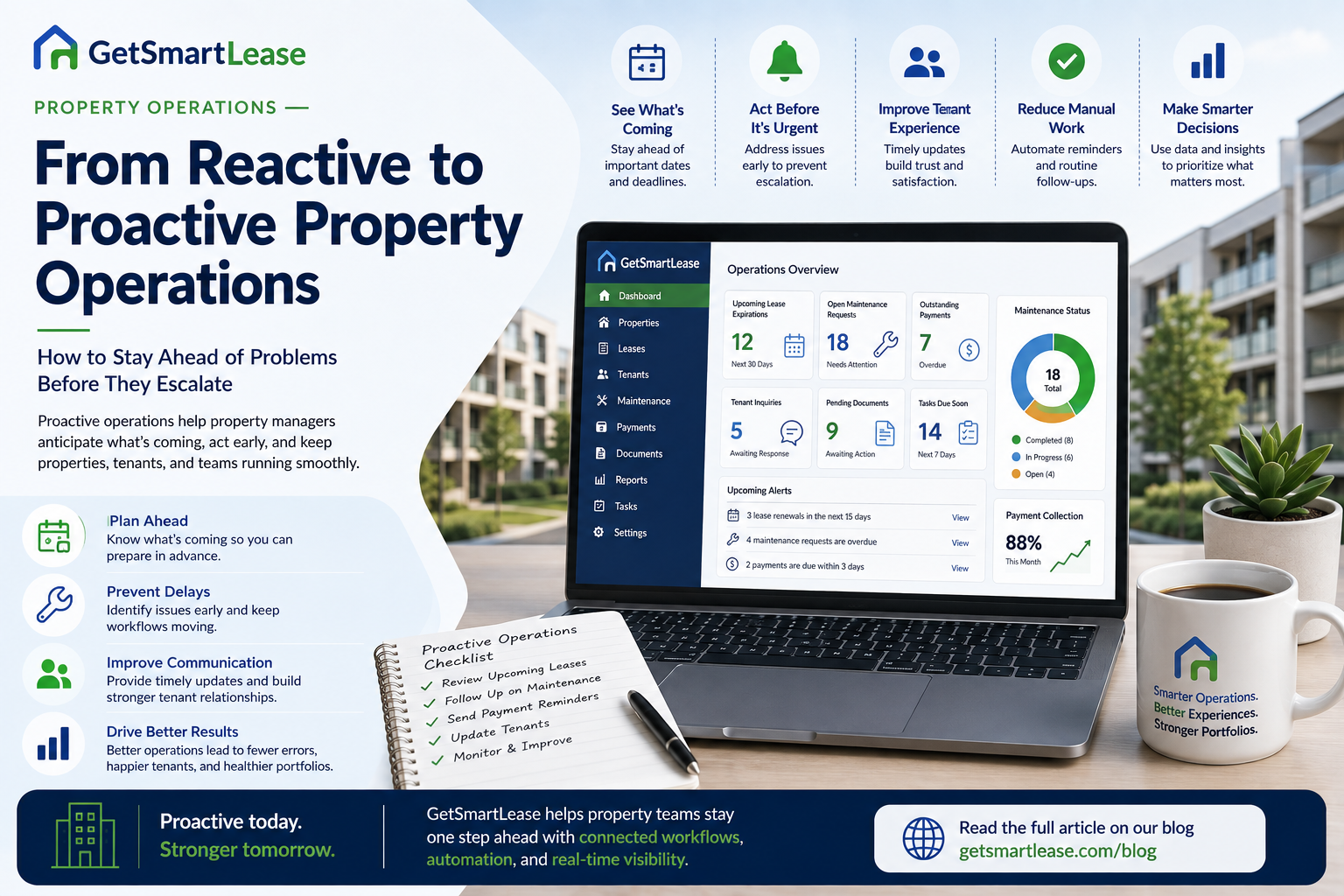
An operational dashboard can provide a quick overview of areas requiring attention, such as:
- Open maintenance requests
- Upcoming lease expirations
- Outstanding payments
- Pending tenant applications
- Documents awaiting action
- Unresolved tenant queries
- Tasks approaching deadlines
Instead of searching through multiple systems every morning, teams can immediately see where they should focus.
7. Learn From Recurring Problems
Proactive property operations aren't only about responding earlier.
They're also about understanding why problems keep happening.
If the same maintenance issue repeatedly occurs at a property, it may require a longer-term solution.
If lease renewals consistently become last-minute tasks, the renewal process may need an earlier trigger.
If tenants repeatedly ask the same questions, communication during onboarding may need improvement.
Operational data can reveal these patterns.
Once teams understand where friction occurs, they can improve the underlying process rather than repeatedly treating the symptoms.
Proactive Doesn't Mean Fully Automated
Automation is valuable, but proactive property management doesn't mean removing people from the process.
Some situations require judgment, empathy, negotiation, or direct communication.
Technology should handle predictable administrative work and highlight situations requiring attention.
Property managers can then spend more time making decisions and supporting tenants instead of constantly searching for information and chasing routine tasks.
Build Operations That Stay One Step Ahead
The strongest property operations aren't necessarily the busiest.
They're the ones where teams know what's happening, what's coming next, and what requires attention.
Moving from reactive to proactive operations can help property managers reduce last-minute problems, improve tenant communication, manage workloads more effectively, and create a more consistent rental experience.
As portfolios grow, that visibility becomes even more valuable.
How GetSmartLease Can Help
GetSmartLease helps property teams bring leasing, tenant management, payments, documents, and other important rental workflows into a more connected digital environment.
With better visibility and more structured processes, property managers can spend less time reacting to operational problems and more time staying ahead of them.
See it earlier. Act sooner. Manage smarter with GetSmartLease.