
For years, property management decisions have depended heavily on reports.
Teams reviewed spreadsheets, checked payment records, gathered updates from different departments, and prepared monthly or weekly summaries to understand what was happening across their portfolios.
That approach worked when property operations were less digital.
Today, things move much faster.
Applications arrive online. Leases are signed digitally. Payments happen electronically. Tenants expect quick responses. Property managers may oversee multiple properties and workflows simultaneously.
As a result, knowing what happened last month is no longer enough.
Property management is increasingly moving toward real-time operational visibility—giving teams a clearer picture of what is happening across their properties right now.
1. Static Reports Only Tell Part of the Story
Traditional reports remain useful, particularly for financial analysis and long-term planning.
But they usually describe something that has already happened.
A monthly report might show how many leases were signed, how much rent was collected, or how many applications were processed.
The problem is that operational teams often need answers before the reporting period ends.
For example:
- Which applications are waiting for approval?
- Which leases still require signatures?
- Which payments are outstanding?
- Which tenant requests need attention?
- Which leases are approaching renewal?
- Where are operational delays occurring?
Real-time visibility helps teams move from reviewing historical information to managing current activity.
2. Property Managers Need a Single Operational View
Property information often exists across different places.
Applications may be stored in one system, lease documents in another, payments in a separate platform, and tenant communication in email.
When information is fragmented, answering a simple question can require checking several systems.
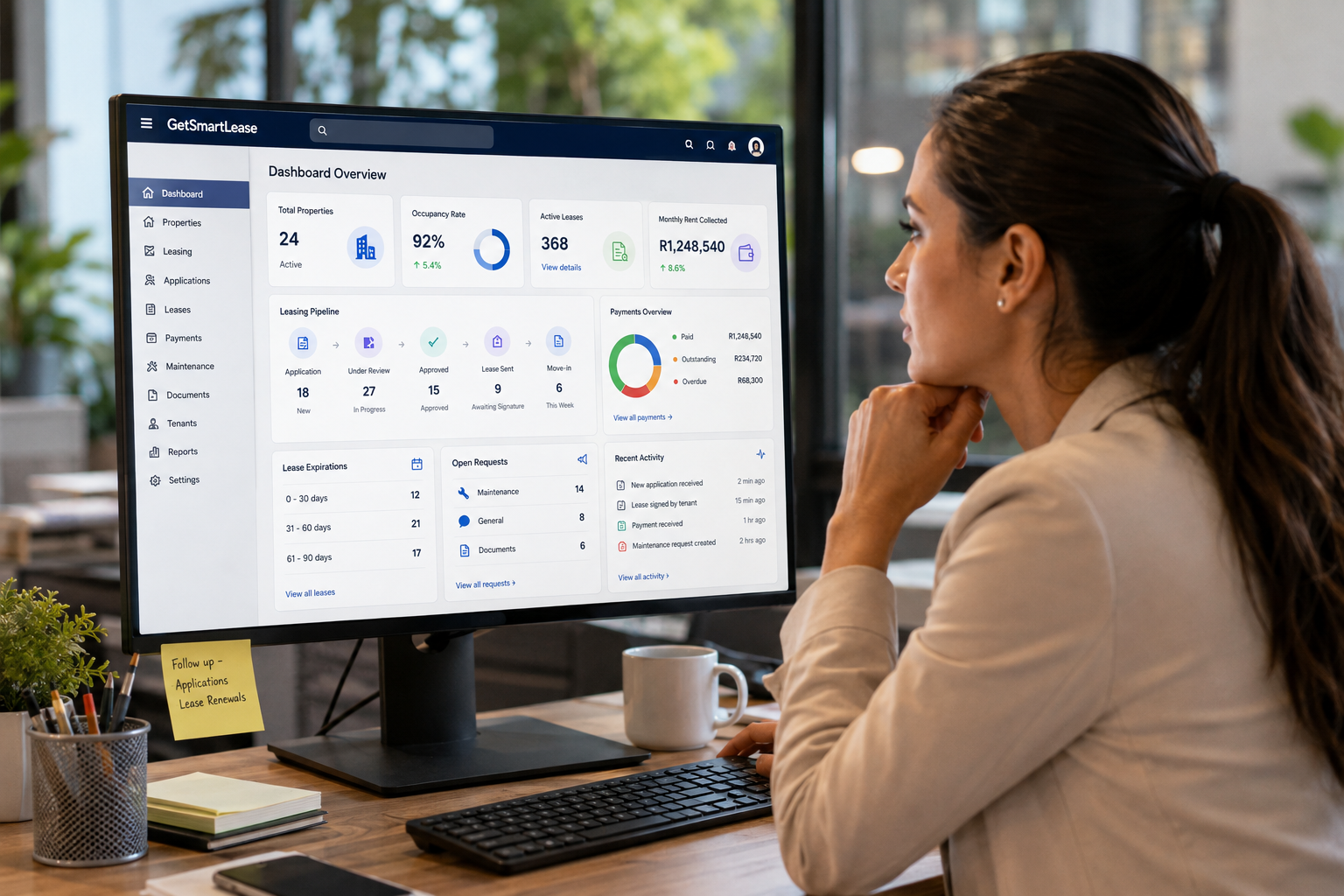
Modern property technology is increasingly bringing important information together through centralized dashboards.
Instead of searching for updates, property managers can see key activities and statuses from one place.
This can create a clearer operational picture and reduce the time spent manually gathering information.
3. Leasing Pipelines Are Becoming More Visible
The leasing process contains several stages:
Application → Review → Approval → Lease → Signature → Payment → Move-In
When these stages are handled manually, it can be difficult to know exactly where every applicant is in the process.
Real-time workflow tracking changes that.
Property teams can quickly identify applications waiting for review, leases waiting for signatures, payments that haven't been completed, or processes that have stalled.
The advantage isn't simply speed.
It's knowing where attention is required.
4. Payment Visibility Is Becoming More Important
Rent collection is one of the most important parts of rental operations.
Property teams need more than a record of transactions. They need a clear understanding of payment status.
Connected payment information can help teams see:
- Payments received
- Payments outstanding
- Upcoming amounts due
- Transaction status
- Payment history
- Related tenant and lease information
Better visibility can reduce the need to manually compare payment records against separate tenant or lease information.
5. Lease Expirations Shouldn't Be a Surprise
Lease renewals are another area where visibility matters.
When lease information is managed through spreadsheets or disconnected records, approaching expiry dates can be easy to overlook.
A more proactive system can surface leases approaching their renewal or expiration periods.
That gives property teams more time to communicate with tenants, prepare renewal options, and plan for possible vacancies.
The industry is gradually shifting from:
“Which leases already expired?”
to:
“Which leases need attention next?”
That is a significant operational change.
6. Real-Time Visibility Supports Better Tenant Experiences
Operational visibility also affects residents.
When property teams can quickly access the latest information, tenants are less likely to encounter situations where employees need to search through multiple systems before providing an answer.
A property manager who can immediately understand the status of a payment, document, application, or request can provide faster and clearer communication.
That creates a better experience without necessarily increasing the amount of work required from employees.
7. Dashboards Are Becoming Action-Oriented
Traditional dashboards primarily displayed numbers and charts.
The next generation of property management dashboards is becoming more operational.
Instead of simply showing:
12 pending applications
a dashboard can help teams identify those applications and determine what needs to happen next.
Instead of simply displaying:
8 leases expiring soon
the system can help surface which leases require renewal action.
The distinction is important.
A useful dashboard shouldn't only answer:
“What is happening?”
It should also help answer:
“What needs my attention?”
8. AI Could Make Operational Visibility Even More Powerful
Artificial intelligence adds another layer to this trend.
When property data is organized and connected, AI can potentially help identify unusual activity, summarize operational information, prioritize tasks, or highlight patterns that might otherwise be missed.
For example, instead of manually reviewing multiple screens, a property manager could receive a concise summary of:
- Applications requiring action
- Outstanding payments
- Upcoming lease expirations
- Important tenant requests
- Operational exceptions
AI therefore has the potential to transform dashboards from passive information displays into more intelligent operational assistants.
From Property Records to Property Intelligence
Property management software has traditionally been very good at storing information.
The industry is now moving toward using that information more effectively.
The progression looks something like this:
Records → Reports → Dashboards → Real-Time Insights → Predictive Intelligence
Each stage gives property teams a better understanding of their operations.
And as portfolios become larger and workflows become more digital, visibility becomes increasingly valuable.
What This Means for Property Managers
Technology decisions are no longer only about whether software can perform a particular task.
Property teams can also ask:
- Can we see what's happening across our portfolio?
- Can we quickly identify tasks requiring attention?
- Are applications, leases, payments, and tenant information connected?
- Can we identify potential delays before they become problems?
- Can our teams access reliable information without searching multiple systems?
These questions reflect an important change in how property management technology is being evaluated.
Looking Ahead
The future of property management isn't simply about collecting more data.
It's about making existing data easier to understand and act upon.
As rental operations become increasingly digital, real-time visibility could become one of the most valuable capabilities for property teams.
The shift is from looking backward through reports to understanding what is happening now—and eventually anticipating what needs to happen next.
For property managers, that means fewer surprises, faster decisions, and a clearer view of the entire rental operation.