
Tenant screening has always been one of the most important — and time-consuming — parts of property management.
For landlords and property managers, choosing the right tenant affects everything from rental income stability to property maintenance and long-term occupancy. Traditionally, this process involved manual document reviews, phone calls, reference checks, spreadsheets, and lengthy approval timelines.
But in 2026, Artificial Intelligence is transforming how tenant screening and lease approvals are handled.
Modern leasing platforms are helping property managers automate decisions, reduce risk, and improve the rental experience for both landlords and tenants.
The Problem with Traditional Tenant Screening
Manual tenant screening creates several operational challenges:
- Delayed approval processes
- Inconsistent evaluation standards
- Human error in document verification
- Difficulty managing high application volumes
- Limited visibility into applicant risk patterns
As rental markets become more competitive, slow approval processes can also lead to lost leasing opportunities.
Tenants today expect fast, digital-first experiences — similar to online banking, e-commerce, and modern financial services.
How AI Improves Tenant Screening
Artificial Intelligence helps streamline and enhance the screening process by analyzing applicant data faster and more accurately.
Modern AI-driven systems can assist with:
Automated Document Verification
AI can review uploaded identification documents, income records, and lease applications to detect inconsistencies or missing information.
Risk Assessment
Smart systems can identify patterns linked to payment reliability, application quality, and potential leasing risks.
Faster Decision-Making
Instead of waiting days for manual reviews, property managers can process applications much faster with automated workflows.
Reduced Administrative Work
Automation reduces repetitive tasks, allowing leasing teams to focus on tenant relationships and portfolio growth.
Better Experiences for Tenants
AI-powered leasing is not only beneficial for property managers.
Tenants also benefit from:
- Faster application responses
- Digital document uploads
- Online identity verification
- Real-time status updates
- Simplified communication
A smoother onboarding process improves tenant satisfaction from the very beginning of the lease journey.
The Role of Unified Leasing Platforms
The biggest advantage comes when AI is integrated into a centralized leasing platform.
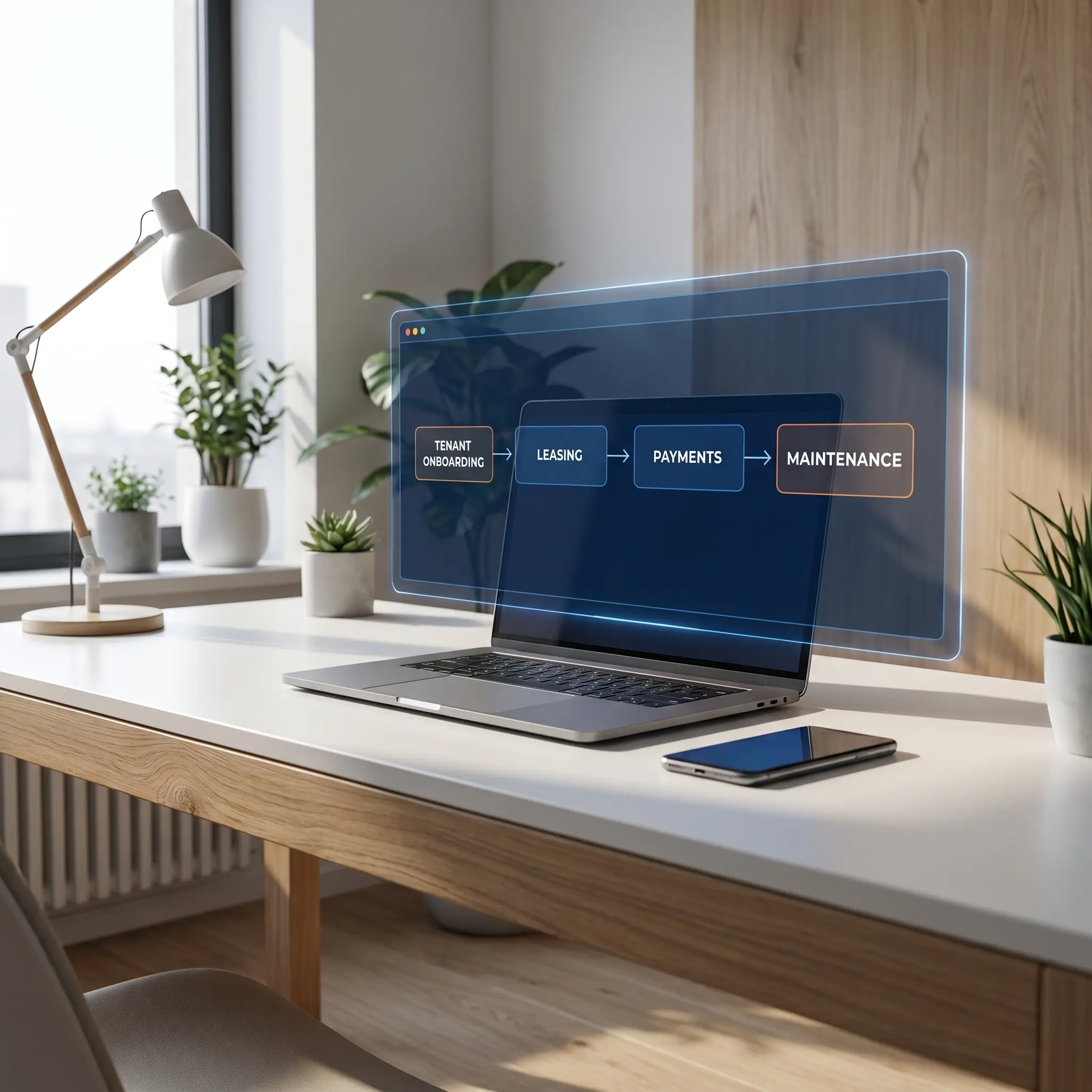
Instead of using separate systems for applications, screening, lease generation, and payments, modern platforms combine everything into one workflow.
This creates:
- Better operational visibility
- Faster leasing cycles
- More consistent approval processes
- Improved compliance tracking
- Stronger portfolio management
Platforms like GetSmartLease are helping property managers move toward more connected, intelligent leasing operations.
AI Is Supporting — Not Replacing — Property Managers
While AI improves efficiency, human decision-making still remains essential.
Technology helps property managers make better-informed decisions, but relationship management, local market understanding, and final approvals still require human oversight.
The goal is not to replace property professionals.
The goal is to eliminate repetitive manual work and create smarter workflows.
Looking Ahead
As property technology continues to evolve, AI-powered tenant screening will become a standard part of modern leasing operations.
Property managers who adopt smarter digital workflows today will be better positioned to:
- Scale their portfolios
- Reduce vacancy periods
- Improve tenant experiences
- Minimize operational inefficiencies
- Make faster and more informed leasing decisions
The future of leasing is becoming more automated, connected, and intelligent — and AI is playing a major role in that transformation.