
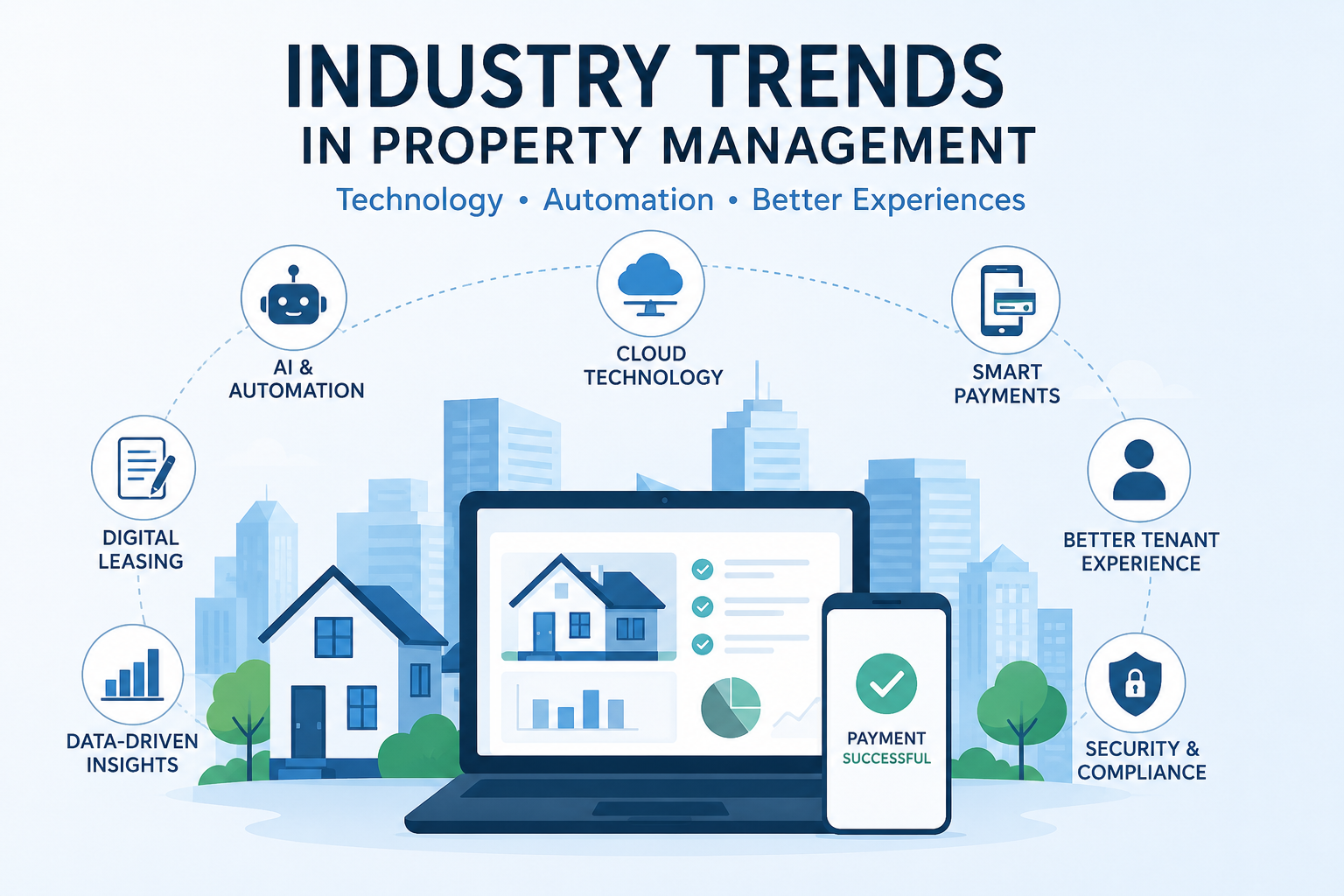
The property management industry is undergoing one of its biggest transformations in recent years. Driven by technological innovation, changing tenant expectations, and the need for greater operational efficiency, property managers are embracing modern solutions that simplify processes while improving the overall rental experience.
As we move through 2026, staying ahead of these industry trends is no longer optional—it is essential for property managers, landlords, and real estate professionals who want to remain competitive.
Let's explore the biggest trends shaping the future of property management.
1. AI is Becoming a Daily Business Tool
Artificial Intelligence (AI) is no longer just a buzzword. Property management companies are increasingly using AI to automate repetitive tasks such as:
- Responding to tenant enquiries
- Screening rental applications
- Categorising maintenance requests
- Generating reports
- Providing customer support through AI chatbots
Rather than replacing property managers, AI allows teams to spend more time on strategic decisions and tenant relationships.
2. Digital Leasing is Becoming the Standard
Paper-based leasing processes are rapidly disappearing.
Modern tenants expect to:
- Apply online
- Upload documents digitally
- Sign lease agreements electronically
- Track application progress online
Digital leasing reduces paperwork, speeds up approvals, and creates a much smoother experience for both tenants and property managers.
3. Smart Payment Solutions Continue to Grow
Online rent payments are becoming the preferred option for tenants.
Today's payment platforms offer:
- Secure online payments
- Automated payment reminders
- Instant payment confirmations
- Multiple payment methods
- Easy reconciliation for property managers
These solutions help reduce late payments while simplifying financial management.
4. Tenant Experience is a Competitive Advantage
Today's renters expect more than just a place to live.
They value:
- Fast communication
- Online self-service portals
- Transparent processes
- Quick maintenance responses
- Easy access to important documents
Property managers who prioritise tenant experience often enjoy higher tenant satisfaction, improved retention, and stronger long-term relationships.
5. Automation is Improving Operational Efficiency
Automation is helping property managers reduce manual work across many daily tasks.
Examples include:
- Lease renewal reminders
- Inspection scheduling
- Maintenance workflows
- Invoice generation
- Rent reminders
- Document management
Automation not only saves time but also reduces the risk of human error.
6. Data-Driven Decision Making
Property managers now have access to more valuable data than ever before.
Modern reporting tools provide insights into:
- Occupancy rates
- Rental income
- Vacancy trends
- Maintenance costs
- Tenant retention
- Payment performance
Using this information helps businesses make smarter, faster decisions.
7. Cloud-Based Property Management Platforms
Cloud technology allows teams to work from anywhere while maintaining secure access to important information.
Benefits include:
- Real-time updates
- Secure document storage
- Remote collaboration
- Automatic backups
- Better scalability
Cloud-based platforms are becoming the foundation of modern property management operations.
8. Cybersecurity is Receiving Greater Attention
As more rental processes move online, protecting tenant information has become a top priority.
Property management businesses are investing in:
- Secure authentication
- Data encryption
- Regular system updates
- Access controls
- Compliance with privacy regulations
Building trust starts with keeping sensitive information secure.
9. Sustainability is Influencing Property Decisions
Environmental responsibility continues to shape the real estate industry.
Many property owners are adopting:
- Energy-efficient lighting
- Smart utility monitoring
- Water-saving technologies
- Digital documentation
- Sustainable building practices
These initiatives help reduce operating costs while supporting environmental goals.
10. Integrated Property Technology Platforms
Instead of managing multiple disconnected systems, many businesses are choosing integrated property management platforms that combine:
- Tenant management
- Lease administration
- Property administration
- Maintenance tracking
- Payment processing
- Document management
- Reporting and analytics
Having everything in one place improves productivity and delivers a better experience for both staff and tenants.
Preparing for the Future
The property management industry will continue evolving as technology advances and tenant expectations grow.
Businesses that embrace digital transformation today will be better equipped to:
- Improve operational efficiency
- Deliver exceptional tenant experiences
- Reduce administrative workloads
- Make informed business decisions
- Scale their operations with confidence
Modern property management is no longer just about managing properties—it is about creating connected, efficient, and tenant-focused experiences powered by smart technology.
Final Thoughts
Industry trends show a clear direction: automation, digital services, AI, and integrated property technology are becoming the new standard. Property managers who invest in these innovations today will be well-positioned for long-term success.
At GetSmartLease, we help property managers simplify leasing, automate workflows, streamline payments, and enhance tenant experiences through an all-in-one property management platform built for the future.