
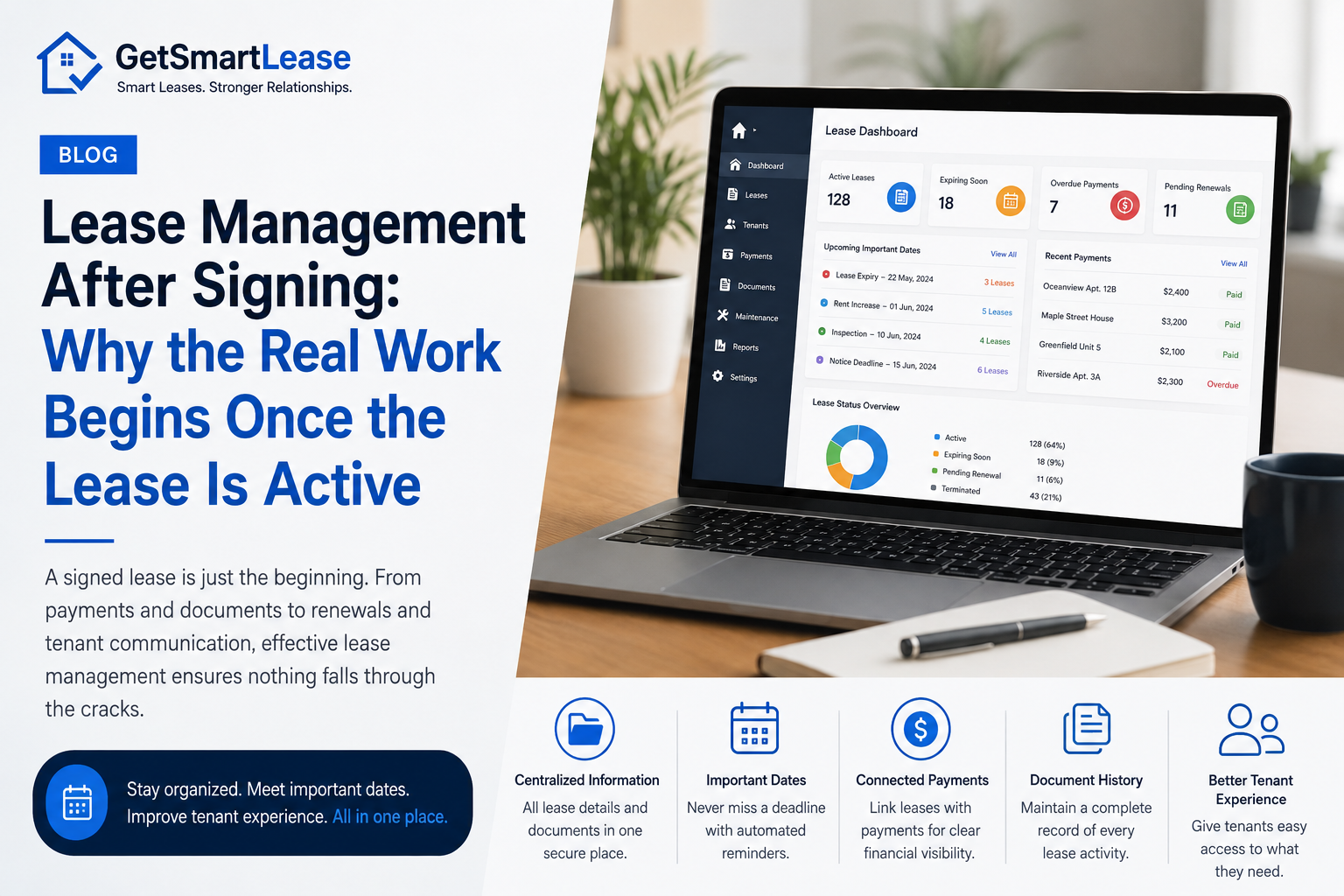
A Signed Lease Is Not the Finish Line
For property managers, getting a lease signed can feel like the end of a long process. The tenant has been approved, terms have been agreed upon, documents have been signed, and move-in can begin.
But operationally, the lease has only just started.
From the day a lease becomes active until the tenant eventually renews or moves out, there are dozens of details that need to be tracked. Rental payments, documents, notices, amendments, important dates, tenant requests, and renewal decisions all become part of the ongoing lease lifecycle.
When these activities are managed across spreadsheets, emails, folders, and separate systems, small administrative tasks can quickly become bigger problems.
Modern lease management should therefore focus on the entire lifecycle, not simply the signing process.
1. Keep Lease Information in One Place
Property managers frequently need quick access to information such as:
- Lease start and end dates
- Monthly rental amounts
- Deposit details
- Payment information
- Tenant and property details
- Notice periods
- Signed agreements
- Supporting documents
When this information is scattered across different systems, even answering a simple tenant question can require searching through several places.
Centralised lease management creates a reliable source of information for everyone involved.
Instead of asking, “Where is the latest version of this lease?” the information can be available directly from the tenant or property record.
2. Make Important Lease Dates Visible
Lease management involves many dates beyond the initial signing date.
There may be:
- Rental due dates
- Lease expiry dates
- Notice deadlines
- Renewal periods
- Inspection dates
- Payment deadlines
- Document expiry dates
Missing one of these dates can lead to unnecessary delays or last-minute administration.
A digital lease management process makes upcoming milestones easier to identify so property managers can act before something becomes urgent.
3. Connect Lease Management With Payments
The lease defines what should be paid, while the payment system records what has actually been paid.
These two areas should not operate independently.
When lease and payment information are connected, property managers can more easily understand the financial position of an active lease.
For example, instead of manually comparing rental records against a lease agreement, teams can quickly identify the relevant tenant, property, rental amount, invoice, and payment status.
This reduces repetitive administration and gives teams better visibility into rental operations.
4. Maintain a Clear Document History
A lease can generate many documents during its lifecycle.
There may be the original agreement, signed copies, invoices, payment confirmations, notices, amendments, inspection reports, and renewal documents.
Without structured document management, property managers can easily end up with files such as:
Lease_Final.pdf
Lease_Final_New.pdf
Lease_Final_Signed_Updated.pdf
That makes it difficult to know which document is actually current.
A structured lease management platform can associate documents with the correct tenant, property, application, and lease, creating a clearer record throughout the tenancy.
5. Handle Lease Changes Without Losing Context
Not every lease follows a perfectly predictable path.
A tenant might request an early cancellation. Rental terms may change. A lease could be renewed, extended, or terminated.
Each change can involve new approvals, documents, calculations, communication, and status updates.
Managing these processes separately from the original lease creates fragmented records.
A lifecycle-based approach keeps these events connected to the lease so teams can understand not only the current status, but also how the lease reached that status.
6. Start Renewal Management Earlier
Renewals should not begin a few days before a lease expires.
Property managers need enough time to review the tenancy, communicate with the tenant, consider updated terms, prepare documents, obtain signatures, and complete the next agreement.
Better lease visibility makes it easier to identify upcoming expirations and start renewal conversations earlier.
For tenants, this creates a smoother experience.
For property managers, it reduces the pressure of last-minute renewal administration.
7. Give Tenants Better Visibility
Lease management should not only make life easier for property managers.
Tenants also benefit when they can access relevant information without repeatedly contacting management.
A digital tenant experience can provide visibility into areas such as:
- Lease information
- Documents
- Rental transactions
- Invoices
- Payment records
- Requests
- Renewal or cancellation processes
Self-service access can reduce routine enquiries while giving tenants greater clarity about their tenancy.
8. Build a Reliable Lease History
One of the most valuable outcomes of digital lease management is having a clear history of what happened throughout the lease.
Instead of relying on individual inboxes or spreadsheets, teams can maintain records of important actions, documents, payments, status changes, and decisions.
This becomes particularly useful when questions arise months later.
A good lease management system should make it easy to answer:
What happened, when did it happen, and what is the current status?
From Lease Documents to Lease Lifecycle Management
Property management is moving beyond simply digitising lease agreements.
The bigger opportunity is connecting the processes surrounding the lease.
Applications, agreements, signatures, payments, documents, communication, renewals, cancellations, and tenant records all form part of the same journey.
When these activities work together, property managers spend less time searching for information and manually coordinating tasks.
They gain a clearer picture of every active lease and what needs attention next.
How GetSmartLease Helps
GetSmartLease is designed to bring rental and lease processes together in one connected environment.
By helping property managers organise tenant information, lease records, documents, payments, applications, and ongoing rental processes, GetSmartLease supports a more structured approach to managing the complete lease lifecycle.
Because signing the agreement shouldn't be where digital lease management ends.
It should be where smarter lease management begins.
Simplify the lease lifecycle with GetSmartLease.