
The Renewal Problem Often Starts Earlier Than You Think
A lease may have months left before it expires, so renewal can feel like something that can wait.
Then suddenly the expiry date is approaching.
The property manager needs to contact the tenant, review the existing agreement, decide on new rental terms, prepare documents, obtain approvals, collect signatures, and update internal records.
What should have been a straightforward process becomes urgent.
The problem is rarely the renewal itself. It is often the lack of visibility and preparation leading up to it.
A smarter lease management process treats renewal as a planned stage of the lease lifecycle rather than an unexpected administrative task.
1. Make Upcoming Expirations Easy to See
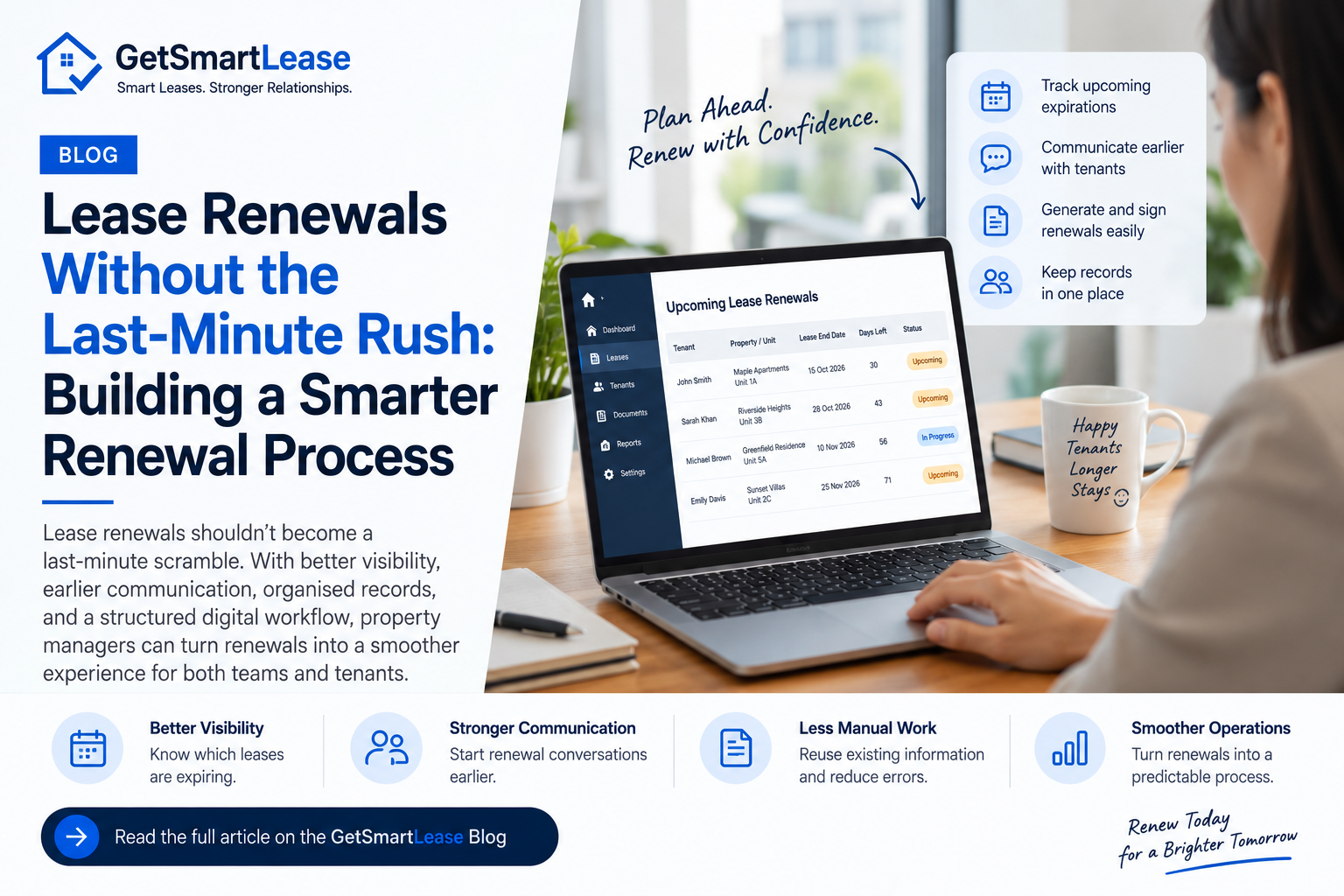
The first step toward better renewals is knowing which leases are approaching their end dates.
When lease information is stored across spreadsheets, emails, folders, and individual calendars, teams may depend on someone remembering to check an expiry date.
That creates unnecessary risk.
Property managers should be able to quickly identify:
- Leases approaching expiration
- Tenants requiring renewal discussions
- Relevant notice periods
- Current rental amounts
- Outstanding actions
- Documents associated with each lease
Better visibility gives teams time to act instead of react.
2. Start Renewal Conversations Earlier
Tenants also need time to make decisions.
They may need to consider new rental terms, personal circumstances, moving options, or changes to the lease.
Waiting until the final weeks creates pressure for everyone.
Starting communication earlier gives both parties enough time to understand their options and resolve questions before deadlines become urgent.
It also creates a better tenant experience.
Instead of receiving an unexpected message close to expiration, tenants experience a more organised and predictable process.
3. Keep the Existing Lease Information Accessible
Renewing a lease usually requires reviewing the current agreement.
Property managers may need information such as:
- Current rental amount
- Lease start and end dates
- Deposit details
- Notice period
- Tenant information
- Property and unit details
- Existing terms and conditions
If these details need to be manually collected from different systems, every renewal creates additional administrative work.
Centralised lease records make it easier to review the current tenancy before preparing the next agreement.
4. Create a Clear Renewal Workflow
Renewals often involve several steps.
For example:
Identify upcoming expiry → Review existing lease → Contact tenant → Agree on terms → Prepare renewal → Review and approve → Sign → Activate renewed lease
Without a defined workflow, it can be difficult to understand where each renewal currently stands.
Has the tenant responded?
Are the new terms approved?
Has the agreement been generated?
Who still needs to sign?
A structured digital workflow makes the next action clearer and reduces the chance of a renewal becoming stuck between teams.
5. Keep Communication Connected to the Process
Renewal discussions can generate many emails, calls, messages, and follow-ups.
When communication happens separately from lease management, important context can become difficult to find later.
Teams should be able to understand the history behind a renewal decision.
For example:
When was the tenant contacted?
What terms were proposed?
Did the tenant accept?
Is another follow-up required?
Connecting communication with the renewal process gives property managers a clearer operational picture.
6. Reduce Repetitive Data Entry
A renewed lease often contains information already available in the existing lease.
Tenant details, property information, unit details, and other records should not need to be repeatedly entered from scratch.
Reusing existing information where appropriate can save time and reduce errors.
Property managers can then focus on reviewing what actually changed — such as rental amounts, dates, or specific terms.
7. Make the Signing Process Simple
Once renewal terms are agreed upon, signing should not create another bottleneck.
Digital workflows can help move the agreement from preparation to review and signature without relying on printing, scanning, emailing, and manually filing documents.
Once completed, the signed renewal should also remain connected to the tenant and property records.
This helps maintain a continuous lease history instead of creating another isolated document.
8. Update the Lease Status Automatically
Completing the renewal is not the final administrative step.
Dates, rental information, documents, and lease status may all need to reflect the new agreement.
If these updates depend entirely on manual work, inconsistencies can appear between systems.
A connected process helps ensure that once a renewal is completed, the relevant lease information reflects the new tenancy period.
9. Use Renewal Data to Improve Planning
Renewals are not only administrative events. They can also provide useful operational insight.
Property managers can monitor information such as:
- Upcoming lease expirations
- Renewal decisions
- Renewal completion times
- Non-renewals
- Vacancies resulting from lease endings
- Rental changes at renewal
This information can help teams anticipate workload and make better decisions about occupancy and property operations.
Better Renewals Create Better Tenant Experiences
Renewal is an important moment in the tenant relationship.
A confusing or rushed process can create unnecessary frustration, even when the tenant intends to stay.
A clear process communicates something very different.
It shows that the property manager knows when the lease expires, understands the tenant's current agreement, communicates early, and has a structured process for what happens next.
That can make renewal feel like a natural continuation of the tenancy rather than another complicated administrative procedure.
Moving From Renewal Reminders to Renewal Management
A calendar reminder is useful.
But effective renewal management requires more than remembering an expiry date.
It requires visibility, communication, documents, decisions, approvals, signatures, and updated lease information to work together.
When these activities are connected, property managers can move from last-minute renewal administration to a predictable process.
How GetSmartLease Can Help
GetSmartLease helps property managers bring important rental processes and information into a more connected environment.
By maintaining clearer visibility across tenants, properties, lease information, documents, payments, and ongoing rental activities, teams can manage important lease milestones with greater confidence.
The goal isn't simply to remember that a lease is expiring.
It's to make sure everyone knows what needs to happen next.
Plan earlier. Communicate better. Make every renewal easier with GetSmartLease.