
Digital transformation has changed the way many property management teams handle leasing. Paper documents are being replaced by online forms, electronic signatures are becoming standard, and tenants increasingly expect to complete important rental tasks from wherever they are.
But simply turning a paper lease into a PDF and allowing someone to sign it electronically doesn't necessarily create a truly digital leasing experience.
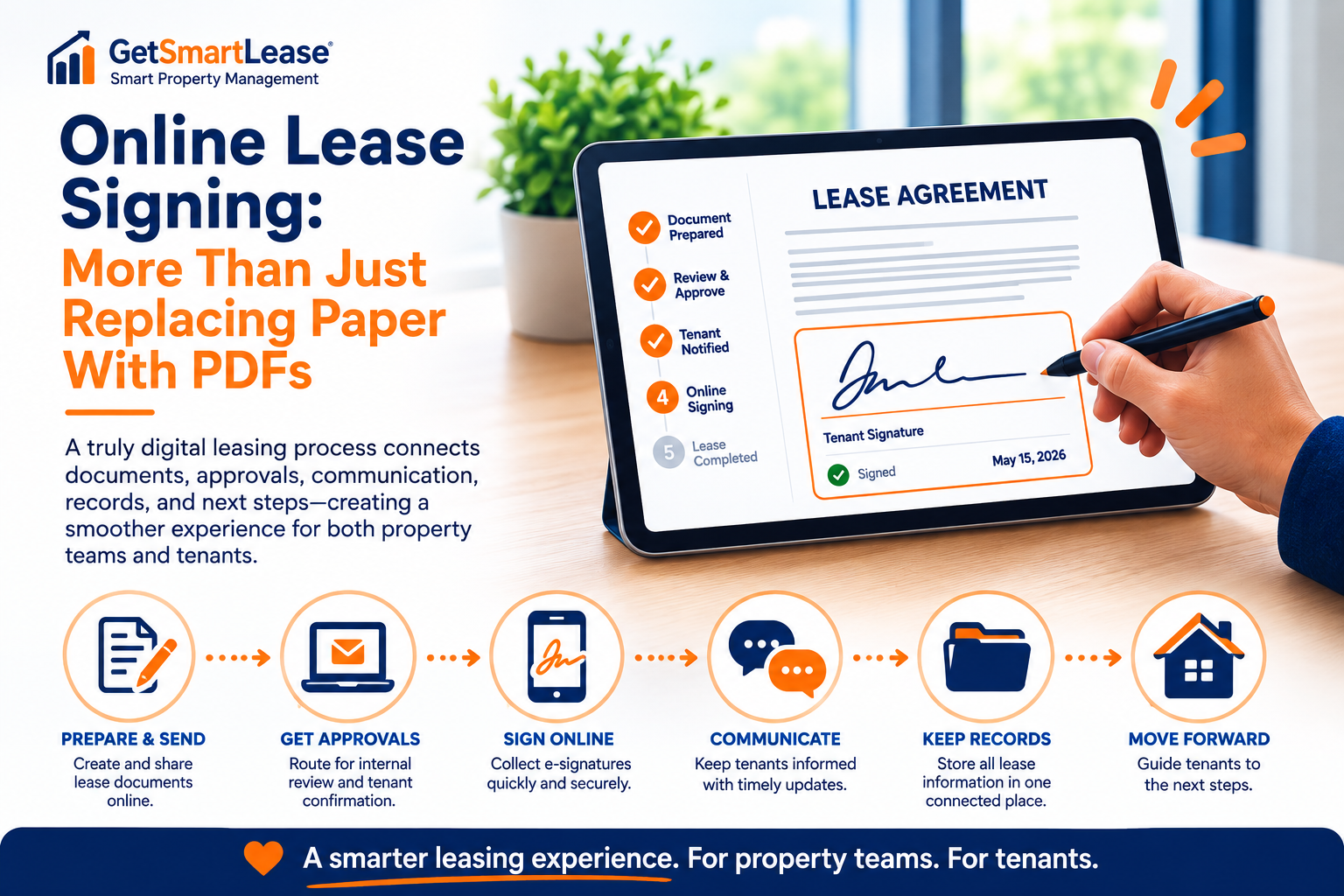
Effective digital leasing connects the entire process—from preparing documents and collecting approvals to communicating with tenants, maintaining records, and guiding everyone toward the next step.
Digital Leasing Goes Beyond the Signature
Electronic signatures are an important part of modern leasing. They eliminate the need to print, physically sign, scan, and return documents.
However, signing is only one step in a much larger leasing journey.
Before a lease reaches the tenant, property teams may need to verify information, prepare documents, confirm lease terms, obtain internal approvals, and communicate with multiple people. After signing, there may still be deposits, payments, documentation, move-in instructions, and other onboarding activities to complete.
When these steps operate separately, teams can still find themselves relying on emails, spreadsheets, manual reminders, and disconnected records.
A truly digital leasing process connects them.
1. Keeping Lease Documents Organized
Lease agreements often involve more than one document. Depending on the property and rental arrangement, there may be addenda, disclosures, policies, notices, and supporting documents.
Managing these files manually can make it difficult to determine which version is current or whether every required document has been completed.
A digital leasing workflow can help keep relevant documents connected to the appropriate tenant and lease, making it easier for property teams to access information when they need it.
2. Making Approvals Part of the Workflow
Some leases require review or approval before they can move forward.
If those approvals happen through separate email conversations or offline processes, they can create unnecessary delays.
Digital workflows can establish clear steps for review and approval so that the appropriate people know when action is required. Once one stage is completed, the lease can move to the next stage without teams having to manually coordinate every transition.
This can make the overall process more consistent and easier to track.
3. Connecting Tenant Communication
Tenants naturally have questions during the leasing process.
Has my application been received?
Is there anything else I need to provide?
When will the lease be ready?
Where do I sign?
What happens after signing?
Clear communication throughout these stages can make a significant difference in the tenant experience.
Instead of relying entirely on individual follow-up emails, a digital leasing process can help property teams provide timely updates, reminders, and instructions at important points in the journey.
The goal isn't to eliminate human communication. It's to make sure tenants receive the information they need while reducing repetitive administrative work for leasing teams.
4. Creating Better Leasing Records
Once a lease is signed, the information associated with it remains important.
Property teams may need to refer back to agreements, dates, documents, communications, or other leasing details throughout the tenancy.
When information is spread across inboxes, folders, spreadsheets, and separate systems, finding the right record can become unnecessarily complicated.
A connected digital process creates a clearer history of the leasing journey and makes important records easier to locate and manage.
5. Guiding Tenants to the Next Step
A tenant signing the lease isn't necessarily the end of the process.
There may still be several steps before move-in, such as completing required documentation, making payments, receiving property information, arranging key collection, or reviewing move-in instructions.
A strong digital leasing experience makes those next steps clear.
Rather than leaving tenants wondering what happens after they click "Sign," the process can guide them naturally from lease completion toward move-in.
That continuity helps create a more seamless transition from prospect to tenant.
Why the Connected Experience Matters
Consider two leasing experiences.
In the first, a tenant receives a PDF by email, signs it electronically, sends it back, waits for confirmation, receives another email about payment, and later receives separate instructions about move-in.
Technically, the lease was signed digitally.
In the second, documents, signatures, approvals, communications, records, and next steps are part of a connected process. Both the tenant and property team can more easily understand what has been completed and what needs to happen next.
That's the difference between simply digitizing a document and building a digital leasing experience.
Benefits for Property Teams and Tenants
When leasing activities are connected, property teams can reduce repetitive administrative tasks, improve visibility into lease progress, maintain more organized records, and create more consistent processes.
Tenants benefit as well. They get a leasing journey that is easier to understand, more convenient to complete, and clearer about what comes next.
That matters because the leasing process is often one of a tenant's earliest meaningful interactions with a property management company. A complicated experience can create frustration before move-in, while a smooth process can help establish a positive relationship from the beginning.
The Future of Online Leasing Is Connected
Electronic signatures solved an important problem: they made it possible to sign lease documents without being physically present.
The next stage of digital leasing goes further.
It's about connecting the activities surrounding that signature—documents, approvals, communication, records, payments, and next steps—into a more unified journey.
For property management teams, digital leasing shouldn't simply mean replacing paper with PDFs. It should mean creating a leasing process that is easier to manage for teams and easier to navigate for tenants.
And when every step works together, signing the lease becomes exactly what it should be: one smooth step in a much better rental journey.