
Rent collection is one of the most important parts of property management, yet traditional payment processes can create unnecessary work for both property managers and tenants.
Manual bank transfers, checks, cash payments, payment reminders, and spreadsheet-based tracking can make it difficult to know who has paid, what is still outstanding, and whether a payment has been properly recorded.
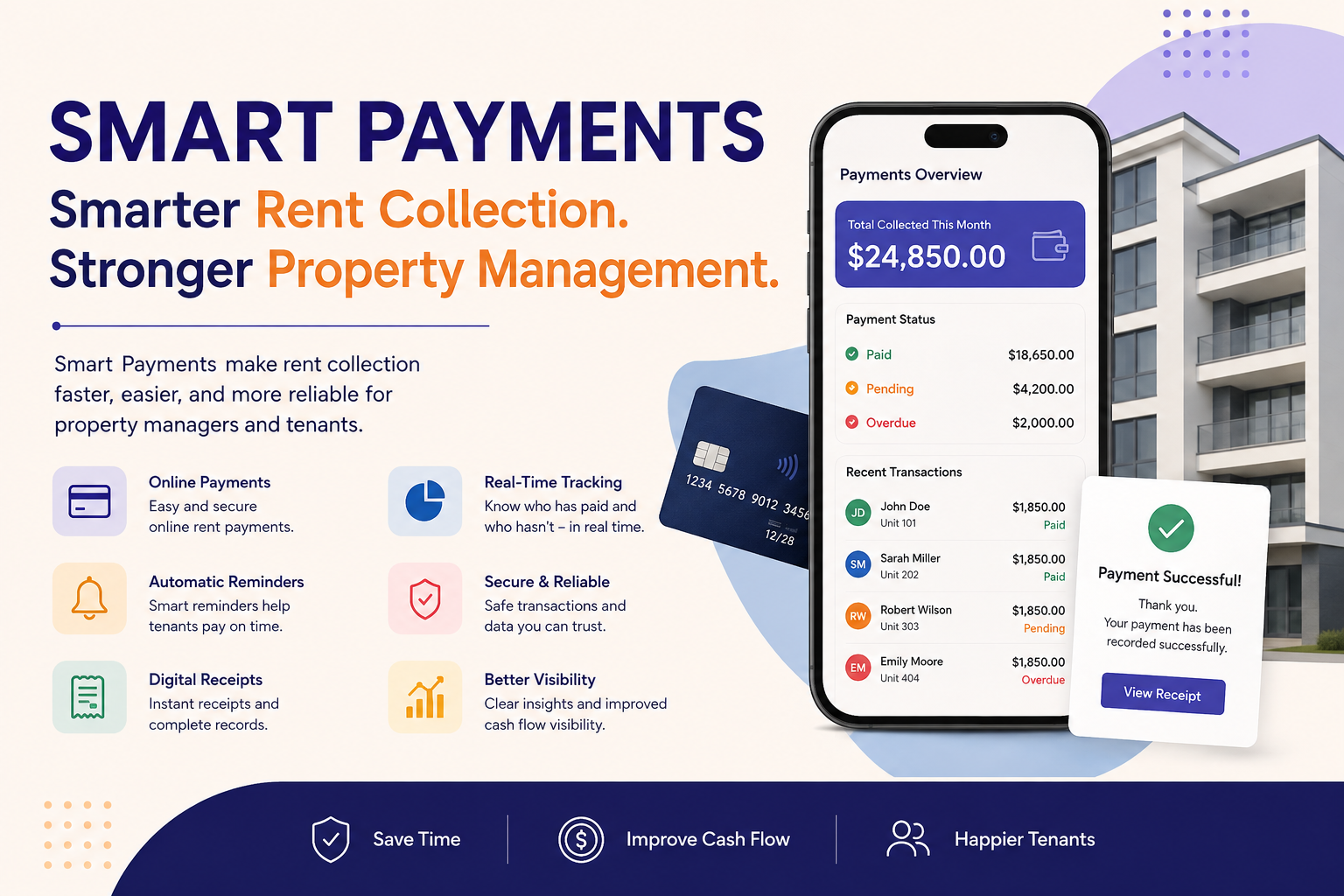
Smart Payments changes this by bringing digital payments, payment tracking, reminders, and transaction records into a more connected workflow.
The result is a rent collection experience that is simpler for tenants and easier for property teams to manage.
What Are Smart Payments?
Smart Payments refers to a digital approach to collecting and managing rent and other property-related payments.
Instead of treating payment as a separate monthly transaction, a smart payment system can connect payment activity with tenant and lease information.
Depending on the platform, this can include:
- Online rent payments
- Automatic or scheduled payments
- Payment reminders
- Real-time payment status
- Digital receipts
- Transaction history
- Outstanding balance tracking
- Payment records connected to tenant accounts
This gives property managers a clearer picture of payment activity while providing tenants with a convenient digital experience.
1. Make Rent Payments More Convenient for Tenants
Tenants increasingly expect everyday services to be available online, and paying rent is no different.
A digital payment experience allows tenants to make payments without visiting a property office, writing checks, or relying on manual processes.
When payment is simple and accessible, tenants can complete one of their most important monthly responsibilities with less friction.
Convenience isn't only about technology. It contributes to the overall tenant experience.
2. Reduce Manual Rent Collection Work
Traditional rent collection can involve several repetitive administrative tasks.
Property teams may need to check bank transactions, update spreadsheets, issue receipts, contact tenants, and manually identify overdue payments.
Smart payment workflows can reduce much of this repetitive work.
Instead of spending time collecting and organizing payment information from different places, property managers can focus on exceptions and accounts that actually require attention.
3. Know Who Has Paid and Who Hasn't
One of the biggest challenges in rent collection is visibility.
When payments arrive through different channels, answering a simple question like "Who still needs to pay?" can take more time than expected.
A centralized payment system provides a clearer view of:
Paid → Pending → Overdue
Property teams can quickly identify outstanding balances and take appropriate action instead of manually comparing multiple records.
4. Send Smarter Payment Reminders
Following up on unpaid rent can consume significant time.
Digital payment systems can support reminders before or after a payment due date, helping tenants stay aware of upcoming or outstanding payments.
For property managers, this creates a more consistent collection process.
Rather than relying entirely on staff members to remember every follow-up, reminders can become part of the normal payment workflow.
5. Keep Better Payment Records
Accurate records matter throughout the entire lease lifecycle.
When payment information is stored digitally, property teams can maintain a clearer history of transactions, including payment dates, amounts, and statuses.
This can be useful when answering tenant questions, reviewing account histories, reconciling payments, or resolving payment-related disputes.
Instead of searching through emails, spreadsheets, receipts, and bank records, teams can access information from a more organized source.
6. Improve Cash Flow Visibility
Knowing that rent will eventually be collected isn't enough. Property managers also need to understand what has actually been received and what remains outstanding.
Better payment visibility helps teams monitor expected and received rent more effectively.
With clearer information, managers can identify payment issues earlier and make better operational decisions.
7. Connect Payments With the Lease Journey
The biggest opportunity with Smart Payments isn't simply replacing cash or checks with an online payment button.
It is connecting payments with the broader leasing experience.
Imagine a workflow where:
Lease Signed → Tenant Onboarded → Rent Scheduled → Payment Collected → Receipt Recorded → Payment History Updated → Renewal Managed
Instead of separate tools and disconnected records, each step becomes part of one continuous tenant journey.
That connection can make property management significantly more efficient.
Smart Payments Benefit Tenants Too
A better payment system isn't only an operational improvement for property managers.
Tenants benefit from:
- Easier ways to pay
- Better visibility into payment status
- Digital payment records and receipts
- Fewer unnecessary payment-related conversations
- More convenient monthly rent management
When tenants can clearly understand what they owe, when it is due, and whether their payment was received, the payment experience becomes much less stressful.
From Rent Collection to a Smarter Property Experience
Digital transformation in property management isn't about adding technology to every process.
It is about removing unnecessary friction.
Smart Payments can transform rent collection from a repetitive administrative task into a more streamlined and transparent process.
When payments, leases, tenant information, and communication work together, property teams spend less time chasing information and more time managing properties and building stronger tenant relationships.
The Future of Rent Collection Is Connected
Property management is moving toward connected digital experiences.
Leasing, communication, maintenance, documents, and payments should no longer operate as isolated processes.
Smart Payments is an important part of that shift.
By making rent collection easier to manage, easier to track, and easier for tenants to complete, property managers can create a more efficient operation while delivering a better tenant experience.
Smarter payments. Less manual work. Better property management.