
For years, rent collection relied heavily on checks, cash, bank transfers, and manual record keeping. While these methods can work, they often require property teams to spend valuable time confirming payments, updating records, following up on overdue balances, and resolving discrepancies.
In 2026, renters increasingly expect the same convenient digital payment experiences they already use for shopping, subscriptions, transportation, and everyday services.
That is where smart payments are transforming property management.
Smart payment systems go beyond simply allowing residents to pay online. They can connect payments with reminders, payment status tracking, automated records, reporting, and property management workflows—creating a smoother experience from payment initiation to reconciliation.
1. Making Rent Payments More Convenient
Convenience can have a major impact on the resident payment experience.
Instead of requiring residents to deliver a check, visit an office, or manually arrange a payment every month, digital rent payment systems can provide an accessible online payment experience.
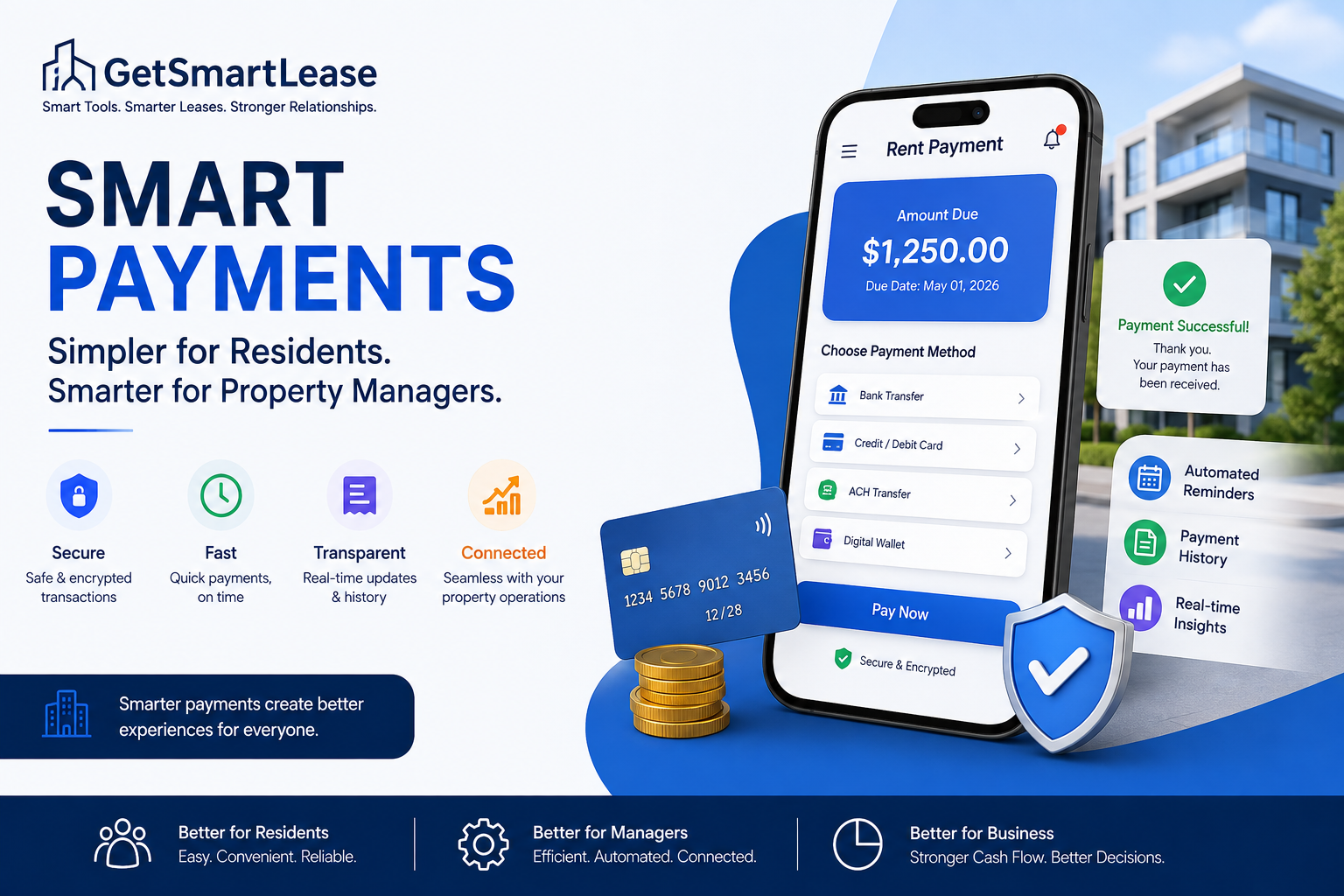
Depending on the payment platform, residents may be able to use options such as:
- Online bank payments
- Debit or credit cards
- ACH transfers
- Mobile payment portals
- Scheduled or recurring payments
Giving residents convenient ways to pay reduces friction and makes completing monthly rent obligations easier.
2. Reducing Late Payments With Automation
Sometimes rent is paid late simply because residents forget the due date or wait until the last minute.
Smart payment workflows can help prevent this through automated reminders.
For example, residents can receive notifications:
Before rent is due — reminding them of the upcoming payment.
On the due date — providing a direct path to complete the payment.
After the due date — notifying them when a balance remains outstanding.
When combined with recurring or scheduled payments, these tools can make rent collection more predictable while reducing the amount of manual follow-up required from property teams.
3. Giving Property Managers Real-Time Payment Visibility
One of the biggest challenges with traditional rent collection is knowing exactly what has been paid.
Property managers may need to check bank transactions, payment records, spreadsheets, or accounting systems before confirming a resident's payment status.
A connected smart payment system can provide clearer visibility into:
- Successful payments
- Pending transactions
- Failed payments
- Outstanding balances
- Payment dates
- Resident payment histories
Instead of piecing information together manually, teams can quickly understand the status of rent collection across their properties.
4. Simplifying Payment Reconciliation
Collecting money is only one part of the rent payment process.
Property teams also need to ensure every transaction is correctly associated with the right resident, lease, unit, and balance.
When this process is handled manually, mistakes can happen.
Smart payment technology can connect payment information directly with property and lease records, reducing duplicate data entry and making reconciliation easier.
This can save administrative time while improving the accuracy of financial records.
5. Creating a Better Resident Experience
Payments are a recurring interaction between residents and property managers.
If the payment process is confusing or inconvenient every month, it can negatively affect the overall resident experience.
A simple digital payment journey gives residents greater control.
They can potentially:
- View balances online
- Check payment history
- Receive payment confirmations
- Manage recurring payments
- Access receipts
- Complete payments from a phone or computer
The easier the process becomes, the fewer payment-related questions property teams may need to handle.
6. Improving Payment Security
Handling physical cash or checks introduces operational risks.
Checks can be lost, manual records can contain errors, and sensitive financial information must be handled carefully.
Modern digital payment platforms can provide security measures such as encryption, secure payment processing, authentication, transaction records, and controlled access.
While no payment system eliminates every risk, moving away from fragmented manual processes can help property organizations build a more controlled and traceable payment workflow.
7. Turning Payment Data Into Useful Insights
Smart payments can also provide valuable operational information.
Instead of viewing rent collection as a series of isolated transactions, property managers can analyze payment patterns across their portfolio.
For example, teams may be able to identify:
- Properties experiencing frequent late payments
- Changes in collection rates
- Common payment failure patterns
- Outstanding balances
- Payment method preferences
- Trends in payment timing
These insights can help property managers improve collection strategies and make better operational decisions.
8. Connecting Payments With the Entire Leasing Journey
The biggest opportunity comes when payments are not treated as a standalone function.
Imagine a connected rental journey:
A prospect completes an application.
The lease is generated and signed digitally.
Move-in charges are collected online.
Monthly rent payments are scheduled.
Payment confirmations and records are automatically maintained.
Renewal information is connected with the resident's account.
Instead of moving between disconnected systems and manual processes, property teams can manage more of the resident lifecycle through connected digital workflows.
The Future of Rent Collection Is Connected
Smart payments are not simply about replacing checks with an online payment button.
They are about creating a more connected rent collection process where payments, residents, leases, records, notifications, and property operations work together.
For property managers, this can mean fewer repetitive administrative tasks, better visibility, and more efficient rent collection.
For residents, it can mean a faster, simpler, and more convenient way to manage one of their most important monthly payments.
As property management continues to become more digital, smart payment technology will increasingly become part of a broader connected leasing and resident experience.
Conclusion
Rent collection does not have to be a monthly administrative burden.
By combining digital payments with automation, real-time tracking, reminders, and connected property records, property managers can create a payment experience that works better for their teams and their residents.
The next generation of property management isn't just digital.
It's connected, automated, and built around convenience.
GetSmartLease helps property teams move toward smarter, more connected leasing and property operations.