
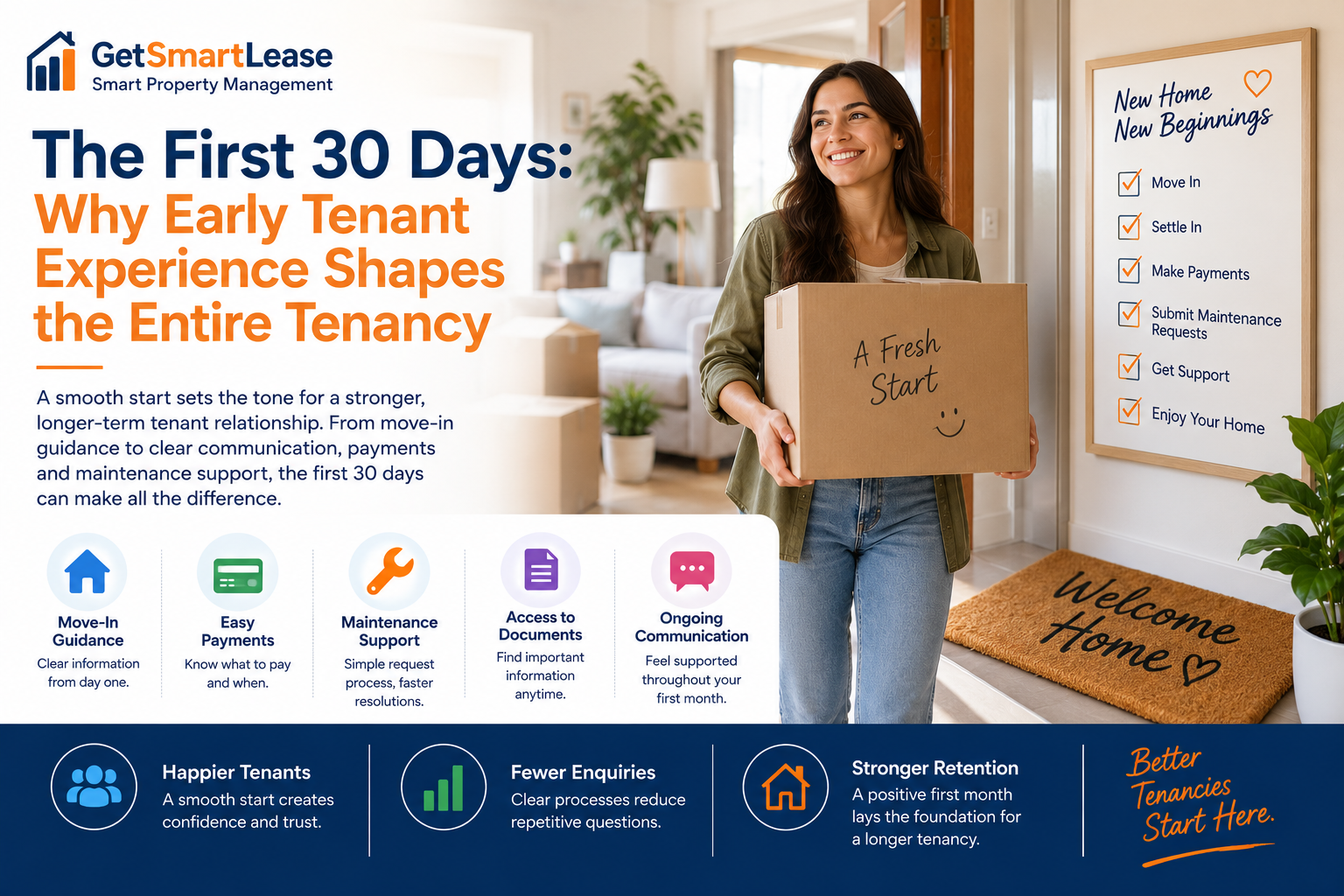
The Tenant Experience Starts Earlier Than You Think
For a property manager, move-in may feel like the completion of an application and leasing process.
For the tenant, it's only the beginning.
The first few weeks in a new home are filled with questions.
Where can I find my lease?
How do I make rent payments?
Who should I contact if something breaks?
How are maintenance requests handled?
Where can I find important property information?
When these questions are answered clearly, tenants can settle into their new home with confidence.
When they're not, even relatively small problems can create frustration.
That's why the first 30 days deserve special attention.
A well-designed early tenant experience can establish trust, reduce unnecessary enquiries, and create expectations that support the relationship throughout the tenancy.
1. Make Move-In Day Simple
Moving day is already stressful.
Tenants may be coordinating transportation, utilities, work schedules, furniture deliveries, family responsibilities, and many other tasks.
Property management shouldn't add unnecessary confusion.
Before move-in, tenants should have clear information about:
- Move-in date and time
- Key or access arrangements
- Required payments
- Important documents
- Property rules
- Parking information where applicable
- Emergency contacts
- How to reach property management
Providing this information in advance allows tenants to prepare instead of searching for answers on move-in day.
The objective is simple:
Make the first interaction with their new home feel organized.
2. Give Tenants One Clear Starting Point
New tenants are often given a large amount of information.
Lease documents may arrive through email.
Payment instructions may be somewhere else.
Maintenance information may be included in another document.
Property rules may exist in yet another location.
Even when all the information has technically been provided, the experience can still feel complicated.
A better approach is to give tenants a clear starting point.
A tenant portal or centralized digital experience can provide access to important information such as:
Lease → Payments → Documents → Maintenance → Support
Instead of remembering where everything was originally sent, tenants know where to look.
3. Explain How Rent Payments Work Before the First Due Date
The first rent payment shouldn't become a learning exercise.
Before payment is due, tenants should understand:
- How much they need to pay
- When payment is due
- Which payment methods are available
- Where they can view the amount
- How they know payment was successful
- Where payment history or receipts can be accessed
This is also an opportunity to introduce digital payment features where available.
Clear payment information reduces uncertainty for tenants and can help property managers avoid repetitive questions when the first due date arrives.
4. Introduce the Maintenance Process Early
Don't wait for something to break before explaining maintenance.
Tenants should know from the beginning how to report an issue.
Explain:
- Where maintenance requests should be submitted
- What information should be included
- How urgent issues are handled
- How tenants will receive updates
- Who to contact in an emergency
This becomes particularly important during the first few weeks.
A new tenant may discover an issue that wasn't obvious during inspection or move-in.
How the property management team responds to that first maintenance request can strongly influence the tenant's early perception of the service.
5. Respond Quickly to Early Issues
The first problem a tenant experiences can become an important moment in the relationship.
Imagine a tenant discovers a minor plumbing problem during their first week.
They submit a request.
Nothing happens.
They contact management again.
Still no update.
A relatively small maintenance issue has now become a communication problem as well.
Compare that with:
Request submitted → Confirmation received → Request assigned → Update provided → Issue resolved
The technical problem might be identical.
The experience isn't.
Early responsiveness demonstrates that the processes introduced during move-in actually work.
6. Don't Overload Tenants With Information
Good onboarding doesn't mean sending every possible piece of information on day one.
Too much information can be just as confusing as too little.
Instead, communicate based on timing.
Before Move-In
Provide access details, required payments, documents, and essential instructions.
Move-In Day
Focus on property access, immediate contacts, and practical information.
First Week
Introduce maintenance, payments, documents, and available self-service options.
Before the First Rent Due Date
Provide a useful payment reminder and ensure instructions are clear.
During the First Month
Check whether the tenant has questions or unresolved concerns.
This creates a guided experience rather than an information dump.
7. Make Digital Tools Easy to Understand
Providing a tenant portal or mobile experience is useful only if tenants know how to use it.
During onboarding, introduce the most important functions.
Show tenants where they can:
- View lease information
- Access documents
- Check payment information
- Submit maintenance requests
- Review important updates
- Contact support
Don't try to explain every feature.
Focus on the tasks tenants are most likely to need during their first month.
A simple digital experience can reduce dependency on property management for routine questions.
8. Check In After the First Week
Property managers frequently communicate with tenants when they need something.
A simple proactive check-in can create a very different experience.
After the tenant has had several days to settle in, ask:
"How is everything going so far?"
"Is there anything about the property or rental process that isn't clear?"
"Have you experienced any issues we should know about?"
These questions can identify problems before they become complaints.
They also demonstrate that communication isn't limited to payments and administrative requirements.
9. Ask for First-Month Feedback
The end of the first month is a useful opportunity to understand how well the onboarding process worked.
Keep the feedback simple.
You might ask:
Was your move-in experience clear and organized?
Was it easy to find the information you needed?
Do you understand how payments and maintenance requests work?
Is there anything we could have explained better?
This feedback can help with the current tenant, but it can also improve onboarding for future residents.
If several new tenants struggle with the same process, the issue may be with the process rather than the tenants.
10. Use the First 30 Days to Build Trust
Trust isn't created through one welcome message.
It's built when the experience matches what was promised.
If tenants are told maintenance requests will receive updates, they should receive updates.
If payment information is supposed to be accessible online, it should be easy to find.
If property management provides a support channel, tenants should know when and how to use it.
Consistency between expectations and reality is what turns onboarding into trust.
Why the First Month Matters Beyond Move-In
The first 30 days aren't isolated from the rest of the tenancy.
They establish habits and expectations.
A tenant who understands where to find documents is less likely to request copies later.
A tenant who knows how to submit maintenance requests is less likely to use the wrong communication channel.
A tenant who understands payments is less likely to be confused when rent becomes due.
A tenant who experiences responsive service early has a clearer understanding of what they can expect from property management.
The benefits continue long after onboarding is complete.
From First Impression to Long-Term Relationship
Property managers often focus heavily on tenant retention near the end of a lease.
But retention is influenced by experiences that happen much earlier.
The journey can look something like this:
Smooth Move-In → Clear Expectations → Easy Payments → Responsive Maintenance → Consistent Support → Stronger Tenant Relationship → Renewal Potential
That means the foundation for a future renewal can begin during the tenant's very first month.
Create a Stronger Start With GetSmartLease
A better tenant experience begins with making everyday rental processes easier to understand and manage.
GetSmartLease helps connect important property and tenant activities across the rental lifecycle, giving property management teams greater visibility while helping tenants access the information and processes they need.
From documents and payments to tenant applications and lease-related activities, connected digital workflows can help reduce unnecessary friction from the beginning.
Because the first 30 days shouldn't simply be about getting tenants moved in.
They should be about setting up a better tenancy from day one.