
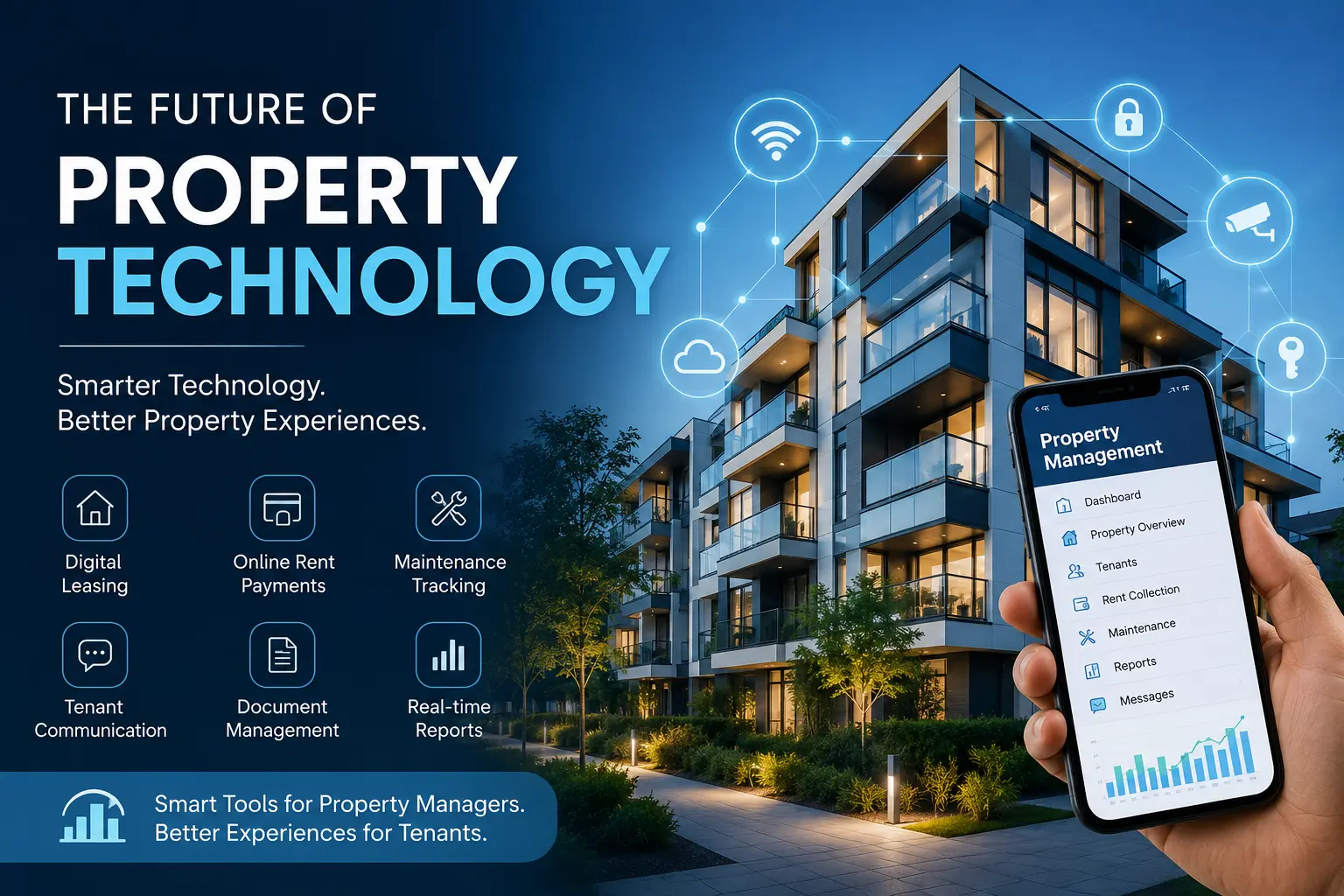
The property industry is evolving faster than ever. Thanks to advancements in Property Technology (PropTech), managing rental properties is no longer about paperwork, endless phone calls, or manual tracking. Today's property managers and landlords are embracing digital solutions that save time, improve efficiency, and create better experiences for tenants.
Whether you manage a single apartment building or an entire portfolio, investing in the right technology can help you stay competitive in an increasingly digital world.
What is Property Technology?
Property Technology, often called PropTech, refers to digital tools and software designed to simplify the buying, selling, renting, and management of real estate. From online lease signing to automated rent collection, PropTech helps streamline everyday operations while reducing administrative work.
Why Property Technology Matters
Modern tenants expect convenience. They want to apply online, communicate digitally, pay rent securely, and access important documents anytime.
Property managers also benefit by reducing repetitive tasks, improving accuracy, and gaining better visibility into their operations.
Some key benefits include:
- Faster tenant onboarding
- Secure online document management
- Digital lease agreements
- Automated rent collection
- Real-time maintenance tracking
- Better communication with tenants
- Centralized property information
Digital Leasing Makes Renting Easier
Traditional leasing often involves printing documents, scheduling meetings, and manually collecting signatures. Property technology simplifies this process with digital leasing platforms.
With digital leasing, property managers can:
- Send lease agreements electronically
- Collect digital signatures
- Store documents securely
- Track lease status in real time
This reduces delays while creating a smoother experience for everyone involved.
Better Communication Builds Better Relationships
Communication plays a major role in tenant satisfaction. Property technology provides centralized communication tools where tenants can submit maintenance requests, receive important updates, and access documents without unnecessary phone calls or emails.
When communication becomes easier, tenant trust and satisfaction naturally improve.
Data Helps Property Managers Make Better Decisions
Modern property management platforms provide valuable insights through dashboards and reporting features.
Managers can easily monitor:
- Occupancy rates
- Lease renewals
- Rental income
- Outstanding payments
- Maintenance requests
- Property performance
These insights help businesses make informed decisions and improve operational efficiency.
Automation Saves Valuable Time
Many daily property management tasks can now be automated.
Examples include:
- Rent payment reminders
- Lease renewal notifications
- Document generation
- Tenant onboarding workflows
- Maintenance request tracking
- Reporting and analytics
Automation reduces manual work, allowing teams to focus on delivering better customer service.
Secure Document Management
Handling sensitive documents manually can be risky and time-consuming. Property technology enables secure cloud storage with controlled access to leases, tenant records, invoices, and compliance documents.
This improves security while making important files easy to locate whenever needed.
The Future of Property Management
The future of property management will continue to be driven by innovation. Artificial intelligence, predictive analytics, smart building technology, and automation are becoming standard features rather than optional extras.
Businesses that embrace these technologies today will be better prepared to meet tomorrow's expectations while delivering exceptional experiences to both tenants and property owners.
Final Thoughts
Property technology is transforming the rental industry by making property management faster, smarter, and more efficient. From digital leasing to automated workflows and data-driven insights, the right technology helps property professionals save time, reduce costs, and improve tenant satisfaction.
As the industry continues to evolve, adopting modern property technology isn't just a competitive advantage—it's becoming an essential part of successful property management.