
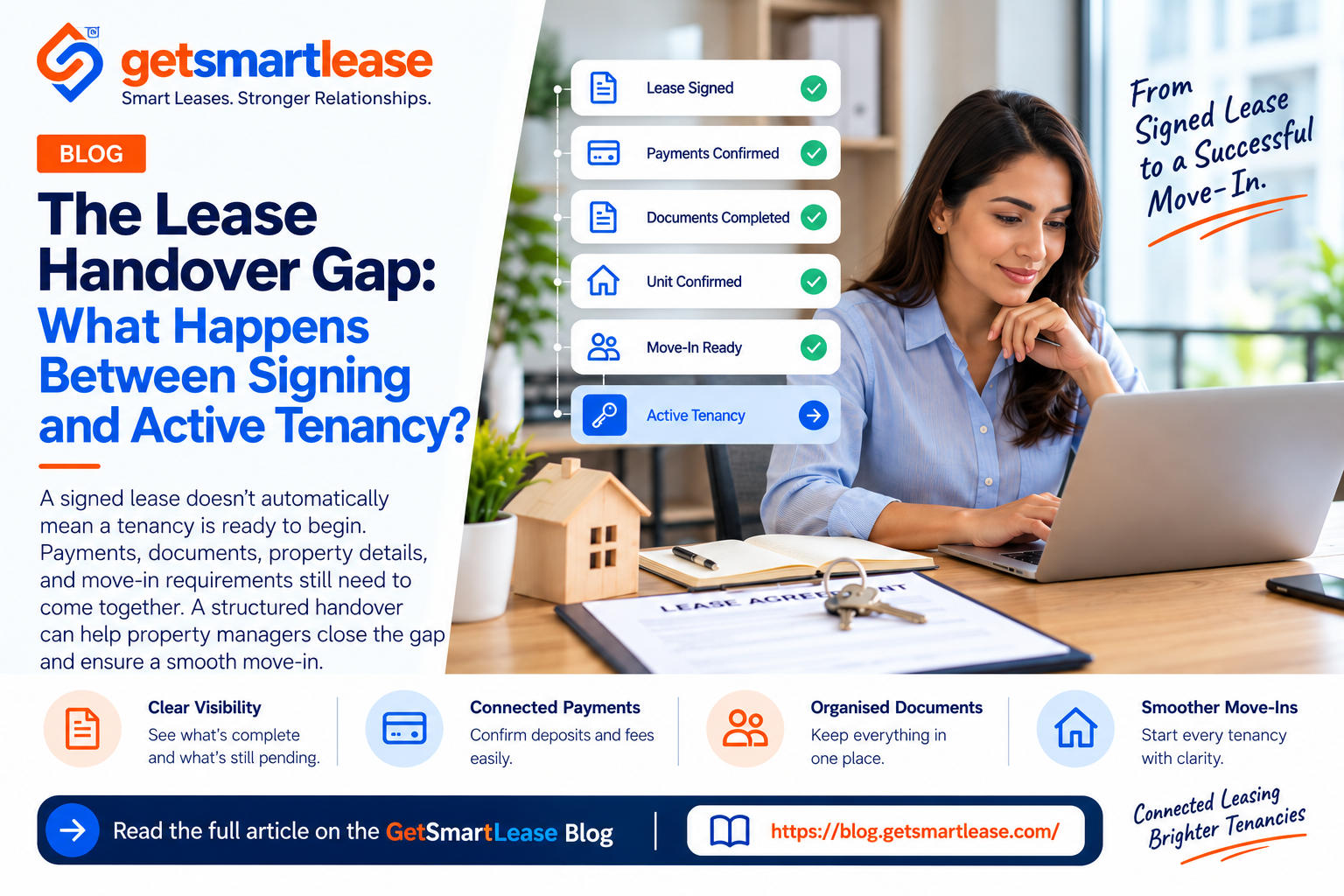
Signing the Lease Is a Milestone — Not the Final Step
After weeks of applications, reviews, approvals, negotiations, and document preparation, getting a lease signed feels like a major achievement.
But there is an important stage that comes immediately afterward.
The tenant still needs to move in.
Between "lease signed" and "tenancy active," property managers may need to confirm payments, complete documentation, allocate or confirm the unit, communicate move-in information, update internal records, and make sure everyone involved knows what happens next.
When these activities aren't connected, a small handover gap can become a source of delays and confusion.
1. Define What "Ready for Move-In" Actually Means
Different teams may have different ideas about when a tenancy is ready to begin.
One person may consider the process complete once the lease is signed. Another may be waiting for a deposit. Someone else may still need to confirm documents or property access.
A clear process should define the requirements that must be completed before move-in.
These might include:
Lease signed by all required parties
Required payments completed
Supporting documents received
Property or unit confirmed
Move-in date agreed
Tenant details verified
Access arrangements prepared
A shared definition of readiness reduces uncertainty.
2. Make Outstanding Actions Visible
After signing, there may still be several tasks waiting for completion.
The problem is that these actions are often spread across email, messaging apps, spreadsheets, and individual reminders.
Instead, property managers should be able to see:
What's complete? What's still pending? Who needs to act next?
A clear status can turn a complicated handover into a manageable workflow.
3. Connect Payments With Lease Progress
Payments can be an important part of the transition into an active tenancy.
Depending on the agreement, teams may need to confirm deposits, initial rental payments, fees, or other required amounts.
If payment information is managed separately from the lease process, someone may need to manually confirm whether everything has been received before allowing the process to continue.
Connecting payment status with the lease workflow provides better visibility and reduces unnecessary checking.
4. Keep Documents Together
The transition to an active tenancy can generate several important documents.
These might include:
Signed lease agreements
Counter-signed agreements
Invoices
Payment confirmations
Identification documents
Supporting documents
Move-in or inspection records
When documents are scattered across inboxes and folders, finding the correct version becomes harder.
Keeping documents associated with the relevant tenant, property, and lease creates a clearer record from the beginning.
5. Make the Next Step Clear to Tenants
Property managers aren't the only people who need visibility.
After signing, tenants may wonder:
Has my lease been accepted?
Is there anything left to pay?
When can I move in?
Do you need any more documents?
What happens next?
Clear communication during this stage can significantly improve the tenant experience.
Instead of repeatedly contacting the property manager for updates, tenants should have a clear understanding of their progress and any outstanding actions.
6. Avoid Re-entering the Same Information
By the time a lease is signed, the property manager may already have collected extensive information about the tenant, property, unit, and agreement.
That information shouldn't need to be manually entered again when creating the active tenancy record.
Connected systems can carry relevant information forward from:
Application → Approval → Lease → Active Tenancy
Reducing duplicate data entry saves time and lowers the risk of inconsistent records.
7. Create a Clear Transition of Status
Statuses help teams understand where a tenant currently sits in the process.
For example:
Application Approved → Lease Prepared → Tenant Signed → Counter-Signed → Payment Confirmed → Move-In Ready → Active
This provides far more useful information than simply marking the application as "completed."
Each status tells the team what has happened and what may need to happen next.
8. Prepare for the Entire Tenancy
A good lease handover doesn't only help with move-in.
It creates the foundation for everything that follows.
Once the tenancy becomes active, property managers may need to manage:
Rental payments
Documents
Tenant queries
Property inspections
Lease changes
Notices
Renewals
Cancellations
Move-out processes
If the information collected during leasing flows directly into ongoing tenancy management, teams can continue working from the same reliable record.
9. Give Property Managers One Clear View
The most useful question during the handover stage is simple:
Is this tenancy ready to start?
Property managers shouldn't need to check five different systems to answer it.
A connected view of lease signatures, payments, documents, unit information, dates, and outstanding actions can provide the answer quickly.
That visibility helps teams identify problems before they delay move-in.
Closing the Gap Between Leasing and Tenancy
Digital leasing has made applications and signatures faster.
But speed alone doesn't solve the entire problem.
If the processes immediately after signing remain manual and disconnected, property managers can still experience delays, duplicate work, and uncertainty.
The next opportunity is to connect the final stages of leasing with the beginning of tenancy management.
When information flows smoothly from one stage to the next, teams gain better visibility and tenants experience a more organised move-in journey.
How GetSmartLease Can Help
GetSmartLease brings important rental processes together across applications, leases, documents, payments, properties, and tenant management.
By keeping information connected throughout the rental journey, property managers can move from a signed agreement to an active tenancy with greater visibility and fewer disconnected steps.
Because a successful tenancy shouldn't begin with teams asking:
"What are we still waiting for?"
It should begin with everyone knowing exactly what happens next.
Connect the handover. Simplify the move-in. Start every tenancy with clarity.
#GetSmartLease #LeaseManagement #PropertyManagement #DigitalLeasing #RentalManagement #TenantExperience #PropTech