
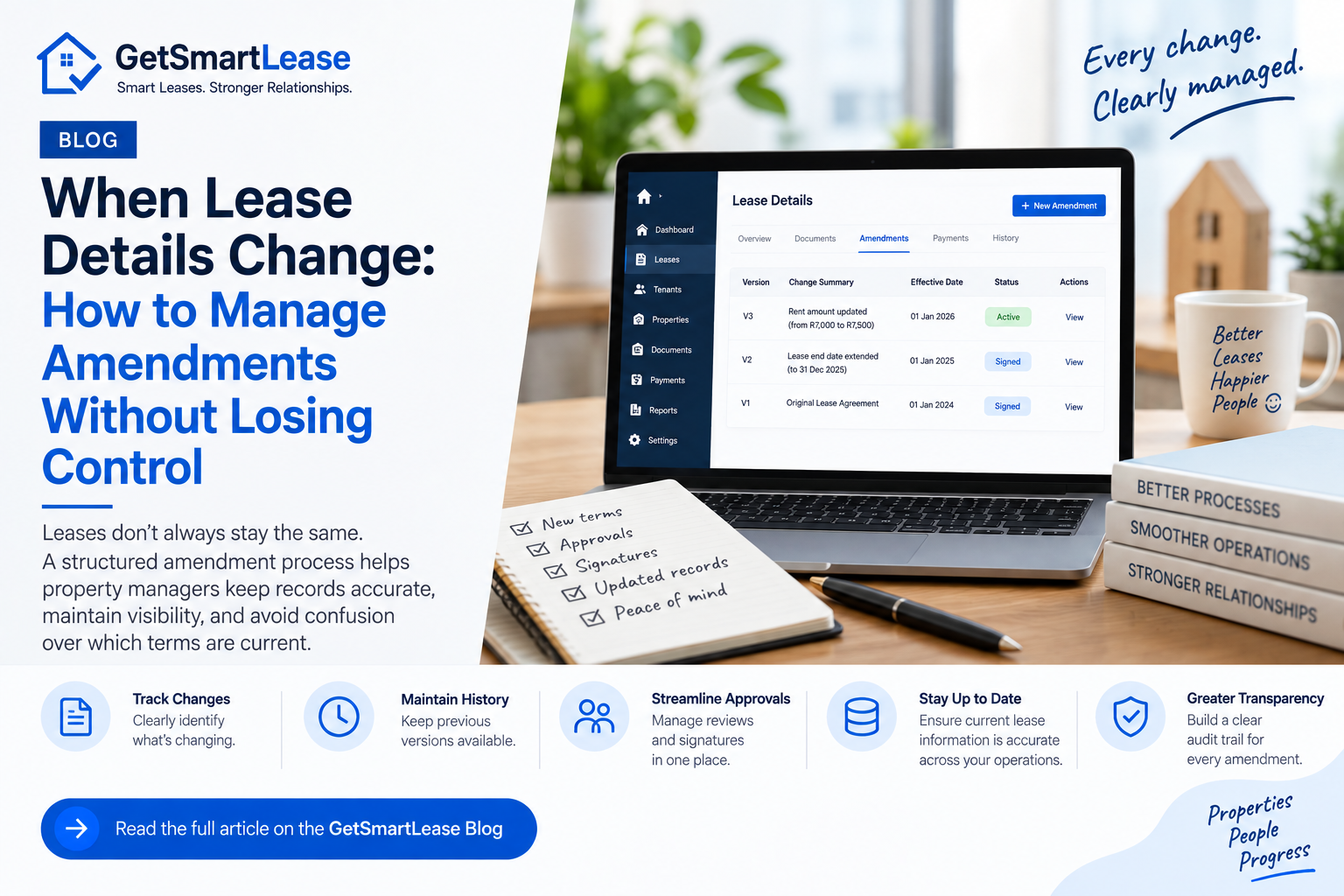
A Lease May Be Signed, but It Isn't Always Static
A signed lease creates an agreed framework for a tenancy. But real rental operations can change over time.
A tenant may request a change. Rental terms may be updated. Occupancy details could change. The parties may agree to extend a date or modify another condition.
The challenge isn't simply making the change.
The bigger challenge is making sure everyone knows what changed, when it changed, who agreed to it, and which terms are now current.
Without a structured process, lease amendments can quickly create uncertainty.
1. Avoid Editing the Original Lease Informally
When a lease detail changes, simply updating an existing file can create problems.
The original agreement represents what the parties initially accepted. If that document is overwritten, it may become difficult to understand the history of the tenancy.
A better approach is to preserve the original agreement and record subsequent changes separately.
This creates a clearer timeline:
Original Lease → Amendment → Current Terms
Property managers can then see both the original agreement and how it evolved.
2. Clearly Identify What Is Changing
An amendment should make the affected terms easy to understand.
Changes might involve:
- Rental amount
- Lease dates
- Occupant information
- Property or unit details
- Payment arrangements
- Responsibilities
- Notice provisions
- Other agreed lease conditions
Instead of forcing someone to compare multiple full documents, the amendment process should clearly identify the relevant change.
That makes reviewing and approving the update easier.
3. Keep Previous Versions Available
Document history becomes especially important when multiple changes happen during a long tenancy.
Imagine a lease that has been amended twice.
If the system only displays the latest document, someone reviewing the tenancy later may struggle to understand when each change occurred.
Maintaining previous versions provides useful context and creates a more complete lease record.
The objective should not simply be storing documents.
It should be maintaining a clear history of the agreement.
4. Track Amendment Status
Not every proposed change immediately becomes part of a lease.
An amendment might move through several stages:
Requested → Prepared → Under Review → Approved → Signed → Active
Tracking these stages helps prevent proposed terms from being mistaken for confirmed terms.
Property managers can also quickly see whether an amendment is waiting for internal review, tenant approval, signatures, or another action.
5. Connect Approvals and Signatures
Important lease changes may require review and agreement from multiple parties.
When approvals happen through disconnected emails and documents, determining whether everyone has accepted the change can become difficult.
A structured workflow can connect:
- The requested change
- The amendment document
- Internal approval
- Tenant review
- Required signatures
- Final activation
This provides a clearer path from a proposed change to an agreed lease amendment.
6. Update the Current Lease Information
Once an amendment becomes effective, the operational lease record may also need updating.
For example, if the rental amount changes, teams shouldn't have to remember that the amount displayed on the original lease is no longer current.
The system should make the latest applicable information easy to identify while preserving the historical record.
This is particularly important when lease information connects with other activities such as invoicing, payments, notices, and renewals.
7. Keep Documents Connected to the Right Lease
Amendments shouldn't disappear into a general document folder.
They should remain associated with the relevant:
- Tenant
- Property
- Unit
- Lease
- Amendment event
This makes information easier to retrieve when property managers, tenants, or authorised team members need it later.
8. Make Changes Visible to the Right People
Lease changes can affect more than the person preparing the amendment.
Depending on the change, other teams may need updated information for payments, property operations, tenant support, or future renewals.
Keeping lease information connected helps reduce situations where one part of the organisation is working with outdated details.
9. Build a Reliable Audit Trail
Months later, someone may ask:
Why did this rental amount change?
Or:
When was this new term introduced?
A strong amendment process should make those questions easier to answer.
A useful lease history can show what changed, when the change became effective, the relevant documentation, and the status of the amendment.
That creates greater transparency throughout the tenancy.
From Document Changes to Controlled Lease Management
Lease amendments are a good example of why lease management needs to go beyond storing PDF agreements.
Real lease management involves maintaining an accurate picture of the tenancy as circumstances change.
Documents, approvals, signatures, dates, payments, tenant records, and current lease information need to remain connected.
When they are managed as part of one lifecycle, changes become easier to understand and administer.
How GetSmartLease Can Help
GetSmartLease supports a more connected approach to rental and lease management by bringing important tenant, property, lease, document, and payment information together.
With clearer records and structured workflows, property managers can maintain better visibility throughout the lease lifecycle — including when the original agreement needs to change.
Because good lease management isn't only about knowing what the lease originally said.
It's also about knowing what applies today and how it got there.
Keep every lease change clear, connected, and easier to manage with GetSmartLease.